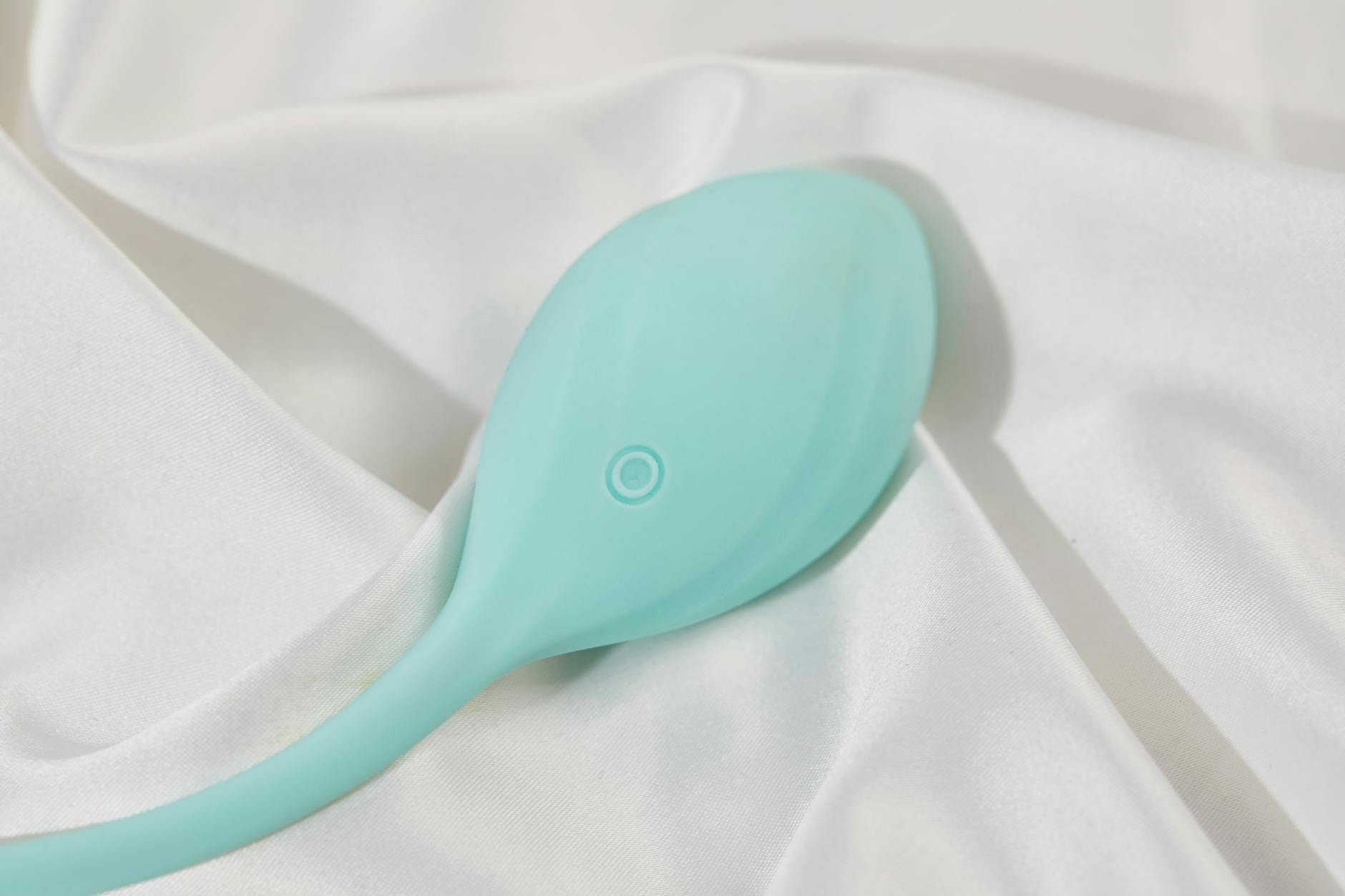
How to Use Lemon Vibrators for Better Sensation During Menopause
Let's be real. Menopause changes how your body responds to touch, including how it responds to vibration. That doesn't mean pleasure disappears. It means the tools that worked before might need adjusting, and the way you use them matters more than ever.
If you've noticed that clitoral vibrators feel less intense during menopause, you're not experiencing a loss. You're experiencing a shift. Understanding that shift is the difference between thinking you're broken and knowing exactly how to rebuild sensation.
Why sensation changes during menopause
Estrogen does more than regulate your cycle. It keeps the skin around your clitoris thick, well-hydrated, and responsive. When estrogen drops, that tissue becomes thinner and more delicate. The nerve endings are still there. They're just under skin that's changed texture and hydration.
This isn't a problem. It's information. It means direct, intense vibration might feel overwhelming on sensitive tissue, but the right approach with the right tool will feel incredible.
Lemon vibrators, particularly clitoral vibrators with air-pulse technology, work differently on thinned tissue than traditional buzzing vibrators. They stimulate nerves through suction and gentle pulsing rather than direct friction. For many people navigating menopause, this is the exact mechanism that rebuilds sensation without discomfort.
The physiological shifts that matter
Three main things happen to clitoral tissue during menopause that affect how vibrators feel.
Epithelial thinning. The outer layer of skin loses elasticity and thickness. This makes intense vibration feel sharp instead of pleasurable. Gentler, wider stimulation becomes more effective. Air-pulse devices distribute sensation across a broader surface area, which works better on thinned tissue than the concentrated buzz of a traditional vibrator.
Reduced blood flow. Estrogen supports vascular health. When it drops, blood flow to genital tissue decreases. This means arousal takes longer to build, and the clitoris takes longer to fully engorge. A slower warm-up using lower vibration settings allows the tissue to fill with blood gradually.
Changed nerve sensitivity. This is the counterintuitive part. While tissue thins, nerve density doesn't decrease. Many people report that sensation actually becomes more concentrated and precise. Some of my clients have had their strongest orgasms post-menopause because they're learning to work with the body they have now, not forcing the patterns from before.
How to rebuild sensation with lemon vibrators
Here's what I recommend to patients who've noticed sensation shift during menopause.
Start with pattern one and stay there. Your instinct will be to reach for higher intensities, thinking that's the only way to feel something. Resist that. Pattern 1 on a lemon clitoral vibrator is already stimulating your nerves. Give it time. Use it for 15 to 20 minutes at low intensity before thinking about escalating. You're retraining your sensitivity, not forcing it.
Add time, not intensity. Extended, lower-intensity stimulation works better on postmenopausal tissue than quick, hard pulses. Spend more time in the warm-up phase. This isn't laziness. It's physiology. Blood needs time to flow. Arousal needs time to build. Lemon vibrators excel at extended play because they're quiet, comfortable to hold for longer periods, and don't fatigue the hand.
Use lubrication consistently. Water-based lube isn't a sign something's wrong. It's a tool that makes sensation better. Thinner tissue benefits dramatically from the glide that lubrication provides. You'll feel more, not less, because the vibrator moves smoothly across the tissue instead of catching or dragging. Reapply as needed during longer sessions.
Angle matters more now. During menopause, the angle at which you apply stimulation becomes crucial. Experiment with approaching the clitoris from different angles. Some people find that coming from the side feels more intense than direct overhead pressure. The angle affects which nerve bundles get stimulated, and your sensitivity map may have shifted.
Building confidence after sensation changes
One of the biggest obstacles I see in my practice is the belief that sensation change equals decline. A person notices their lemon vibrator feels different, assumes something's wrong with them, and stops using it altogether. That's where pleasure actually ends.
Here's the reframe. Your body isn't broken. Your clitoris isn't less capable. You're just learning a new language with a body that's evolved. That's not loss. That's information.
Take a week and explore. Try your lemon vibrator at every setting. Notice where the sweet spot is. It might be pattern 2 instead of pattern 4. That's fine. Document what you find. Some people keep a simple note on their phone: what setting, what angle, how long, what happened. This isn't clinical. It's just data that helps you recreate pleasure reliably.
Working with a partner through sensation changes
If you have a partner, the biggest mistake is trying to hide the shift. "Just don't mention it and they won't notice" backfires spectacularly because your body language, responsiveness, and pleasure change. Partners aren't stupid. They notice. The question is whether you name it or let them guess.
Nameing it is better. "My body's responding differently to vibration right now. I'm going to experiment with slower, longer sessions. Want to be part of that?" This invites them in rather than pushing them away. Many partners find this transition actually deepens intimacy because you're being honest about what's happening and asking for what you need.
If you're exploring solo with a lemon clitoral vibrator and then want to integrate that into partnered time, the transition is easier if you've already mapped what works. You're not figuring it out together in real time. You already know. You're just showing them.
When to seek professional support
If sensation changes are accompanied by pain, that's different. Genitourinary syndrome of menopause is real and common, and topical estrogen therapy can transform things in weeks. A menopause-trained gynecologist is the right person, not a general practitioner.
If you've lost sensation almost entirely and haven't regained it after two months of consistent exploration, check your hormone levels with a doctor. Sometimes supplemental hormone therapy or testosterone treatment opens sensation back up. That's a conversation worth having.
The key is the difference between normal adjustment and actual dysfunction. Normal adjustment feels like exploration and gradual return of pleasure. Dysfunction feels like pain, burning, or complete numbness that doesn't improve with time and technique. Know the difference. Seek support when you need it.
The long view on sensation and aging
Menopause gets framed as an ending. In my experience, it's a middle chapter. And like any chapter transition, it requires paying attention.
You can rebuild sensation. You can have pleasure as profound as ever before. You just might need different tools and different techniques. Lemon vibrators, with their gentle air-pulse technology and customizable intensity, often become the go-to choice for people rebuilding sensation through menopause. They're not gentler because you're fragile. They're effective because they match your physiology.
Give yourself permission to explore. Give yourself time. And understand that the pleasure you build now isn't a replacement for what came before. It's a new version of it. Often better, because it's grounded in real knowledge of what your body needs instead of what you think it should do.
People also ask
How long does it take to rebuild clitoral sensation after menopause starts?
Rebuild is the wrong word, actually. You're not regaining old sensation. You're learning new sensation. That happens on a variable timeline. Some people feel a shift within two to four weeks of consistent exploration with the right technique and tool. Others take eight to twelve weeks. The variation depends on where you are in menopause, whether you're on hormone therapy, stress levels, and how regularly you explore. Consistency matters more than speed. Two sessions a week at low intensity for three months typically shows more progress than one intense session per week.
Can lemon vibrators really feel better than traditional vibrators during menopause?
Yes, for many people. Traditional vibrators use steady, concentrated buzzing. On thinned tissue, that can feel harsh or overstimulating. Lemon clitoral vibrators use air-pulse or suction technology, which distributes stimulation across a broader area. This feels gentler and often produces stronger sensation on postmenopausal tissue. That said, everyone's different. Some people love traditional vibrators still. The point is to experiment and find what matches your body now.
Does using lemon vibrators during menopause affect hormone levels?
No. Sexual activity and vibrator use don't alter your hormone profile. They do temporarily increase blood flow and sometimes trigger the release of oxytocin and endorphins, which feel good and can reduce stress. But they don't change your estrogen or progesterone levels. If you're considering hormone therapy for menopause symptoms, that's a separate conversation with your doctor and unrelated to vibrator use.
Should I use lube with lemon vibrators during menopause?
Almost always yes. Thinner tissue during menopause benefits from the glide that lubrication provides. Use water-based lube only. Oil-based lubes can damage silicone toys, and silicone lubes are harder to clean. Water-based is your friend. It makes sensation better, reduces any catch or drag, and keeps tissue comfortable. Reapply as needed during longer sessions.
Is it normal for sensation to fluctuate even within menopause?
Completely normal. Menopause isn't a single event. It's a years-long transition where hormones fluctuate, sometimes wildly. You might have a week where sensation feels great, then a week where it feels muted again. Stress, sleep, partner dynamics, and where you are in your cycle (even if you don't have periods anymore, your body is still cycling hormonally) all affect sensation. Track it loosely if you want to notice patterns, but don't get discouraged by fluctuation. It's part of the process.
What if lemon vibrators still don't feel like much even after trying these techniques?
First, give it time. Eight to twelve weeks of consistent, low-intensity exploration is the real test. Second, check whether estrogen therapy might help. A gynecologist can assess whether topical or systemic hormone treatment would be appropriate. Third, explore whether the issue is sensation or arousal. Sometimes what feels like numbness is actually just slower arousal. A longer warm-up with a partner, erotica, or other forms of stimulation can change everything. And finally, some people do need to shift tools entirely. If lemon vibrators aren't working after genuine effort, try a different category of stimulator. But also know that sometimes the issue is deeper, and working with a sex therapist trained in menopause can help you unpack what's actually happening.
The takeaway
Menopause changes your body. It doesn't diminish your capacity for pleasure. The shift in clitoral sensation is real, but it's not permanent damage. It's adaptation. And with the right understanding, the right tool, and consistent exploration, you can rebuild sensation that's just as intense and often more satisfying than what came before.
Lemon vibrators, designed with gentle, broad-based stimulation, often become the tool of choice during this transition. Not because you need something softer, but because you need something that works with your physiology instead of against it.
Your pleasure matters. Your body matters. And your willingness to explore what works now, instead of mourning what worked then, is what makes the difference. Start here. Experiment. Take notes. And give yourself permission to rebuild pleasure on your own terms.
If you want to talk through what's happening with your body and your pleasure, reach out. That's exactly what I'm here for.