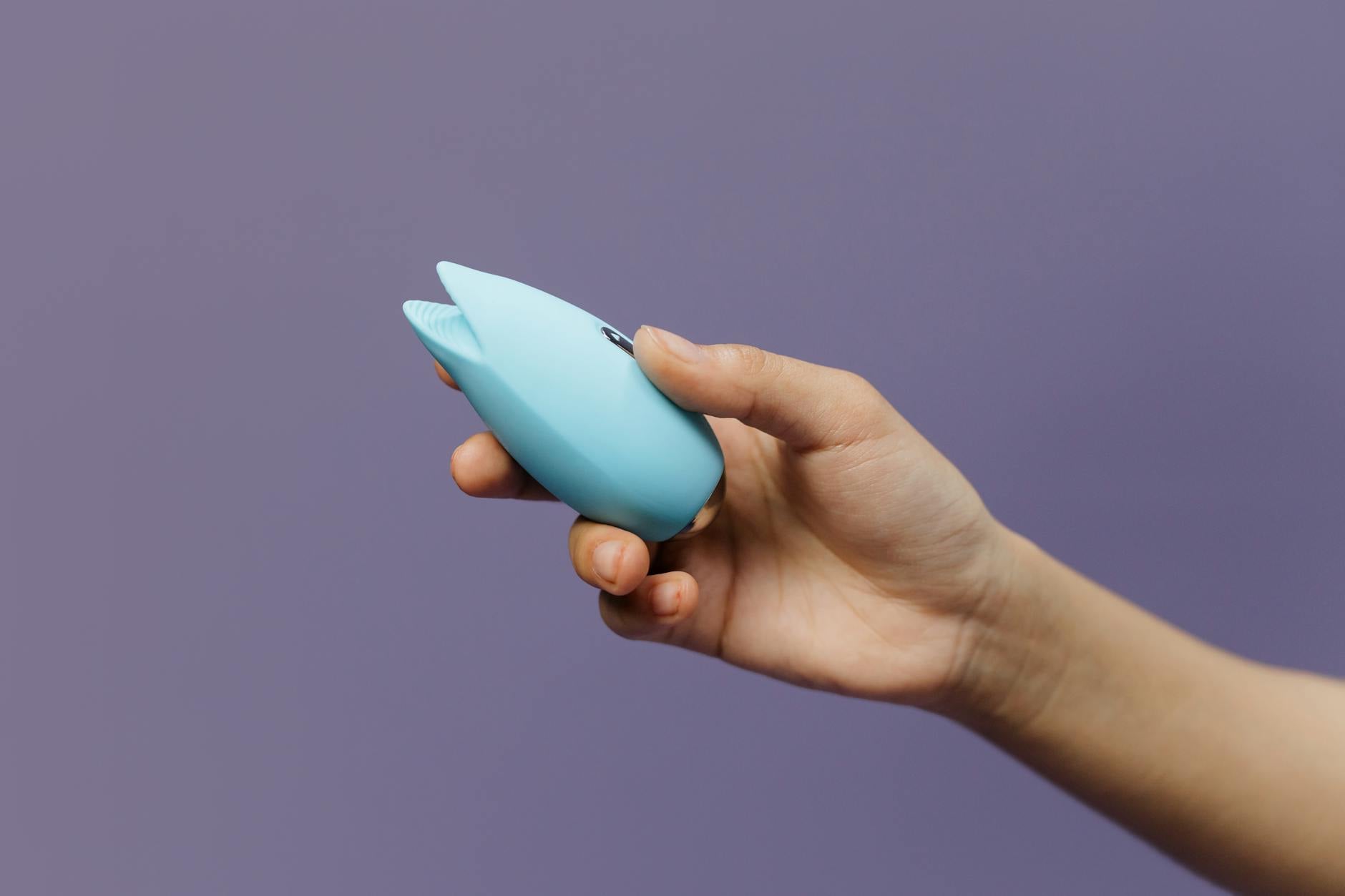
When your pelvic floor holds everything hostage
Let's be real. You want to feel good. Your brain knows it wants to feel good. But somewhere between intention and sensation, your body locks down. Your pelvic floor muscles tighten, squeeze, and refuse to release. Pleasure feels distant, orgasms feel impossible, and even the thought of trying starts to feel like work instead of relief.
Pelvic floor tension isn't laziness or lack of arousal. It's a physiological dead bolt that turns down sensation and blocks the chain reaction that leads to orgasm. And it's wildly common. Whether you're dealing with chronic stress, past pain, performance anxiety, or just years of habit, a clenched pelvic floor rewires how your whole body responds to pleasure.
The good news: lemon clitoral vibrators like the Lem work particularly well once you understand what tension actually does and how to work with it instead of against it.
What happens when your pelvic floor is too tight
Your pelvic floor is a hammock of muscle that sits beneath your pelvis. It's supposed to contract during orgasm and relax between them. It holds your pelvic organs in place, controls bladder function, and yes, contributes to pleasure during sex.
But when it's chronically tight, it doesn't relax. This changes everything about sensation.
Tight muscles have less blood flow. Less blood flow means less engorgement of the clitoris and vulva. Less engorgement means reduced sensitivity. Reduced sensitivity means you need more, harder, faster stimulation to feel anything at all. And often, even that isn't enough because the tension itself is sending a "no go" signal to your nervous system.
Tension also blocks the neurological pathway to orgasm. Your body can't reach climax when your pelvic floor is locked. It's like trying to open a door with the deadbolt still engaged. The key works, but the door won't budge.
Why pelvic floor tension happens (and it's not your fault)
Three main culprits show up repeatedly.
Stress and the nervous system. Chronic stress keeps your body in a low-level fight-or-flight state. Your pelvic floor tightens as part of that survival response. If you've been stressed for months or years, your pelvic floor might not even remember how to fully relax. It's become your baseline.
Pain or trauma history. If you've experienced painful sex, medical trauma, or any pelvic pain condition, your body learned to protect itself by clenching. Even after the original pain resolves, the protective tension sticks around. Your nervous system doesn't know it's safe yet.
Performance pressure. If you've been faking it, rushing it, or worried about "taking too long," you've probably been holding tension to speed things up. The more you try to force pleasure, the tighter you get. It's a vicious loop.
How lemon vibrators work differently when tension is the issue
Here's where Lem Store products like the lemon clitoral vibrator shift things. The suction and pulse design of lemon sexual toys doesn't rely on direct friction. Instead, they create rhythmic stimulation that can actually bypass some of the protective tension because they're not triggering the same defensive response as fingering or traditional vibration.
The key word is "can." Only if you're also working on the tension itself.
Using a lemon sucker on a clenched pelvic floor is like trying to massage a fist. The device will work, but not well. You need to teach your pelvic floor to release first.
The release protocol: three practices before you even use the vibrator
1. The pelvic floor release breath.
This is the foundation. Lie on your back, knees bent, feet flat on the floor. Breathe in slowly through your nose for a count of four. On the exhale, consciously relax every muscle you can feel between your hips. Imagine your pelvic floor is an elevator descending slowly through your body. Exhale for six counts. Do this for five minutes, five nights a week. That's it. Just breathing and releasing.
Why it works: your pelvic floor responds to nervous system state. Slow breathing tells your nervous system it's safe. When your nervous system believes you're safe, your muscles let go.
2. The reverse Kegel.
You know Kegels, right? Squeeze and release. Reverse Kegels are the opposite. Sit comfortably and practice "bearing down" gently, like you're trying to let something go rather than hold it in. Not like you're straining on the toilet. More like releasing a held breath. Twenty repetitions, twice daily. This teaches your pelvic floor that release is possible and safe.
3. External massage with intention.
Once daily, massage the inside of your inner thighs, the area just outside your vulva, and the perineum (the space between your vulva and anus). Use firm, slow circles. You're not trying to be sexual. You're reminding your nervous system that this area can be touched and feel good without obligation. Two to three minutes is enough.
Do these three things consistently for two weeks before introducing the lemon vibrator.
How to use your lemon clitoral vibrator once you've started releasing
When you're ready, approach it differently than you might normally.
Start with intention setting. Before you even turn it on, lie down and do that pelvic floor release breath for two minutes. Tell your body: "We're here to learn what feels good. There's no rush. There's no goal."
Turn on the lemon vibrator at the lowest setting. Let the suction do the work. Don't press hard. The gentler you are, the less your pelvic floor will feel threatened. The less threatened it is, the more it will relax and engage.
If you notice yourself tensing up, stop. Breathe. Reset. Use your vibrator in five-minute increments instead of long sessions. Consistency matters more than duration when you're retraining your nervous system.
Most importantly: if an orgasm happens, great. If it doesn't, it's still working. Your pelvic floor is learning that stimulation equals relaxation, not something to fear.
When to bring a partner in (and how)
If you're with a partner, the conversation matters as much as the technique. Pelvic floor tension often shows up as pain or numbness during partner sex. Your partner might feel blamed, rejected, or helpless.
Separate two conversations: "My body is learning to relax" is different from "Let's reconnect." Have the first conversation without pressure for sex. Explain that you're retraining your nervous system and it's going to take time. Show them that you're using tools like the lemon clitoral vibrator to learn your own body first. Most partners actually feel relieved to know it's not about them.
Once you've spent a few weeks solo, bringing a partner into the process can deepen intimacy. But let solo exploration happen first. You can't teach your body to relax if you're also managing someone else's feelings.
When pelvic floor tension needs a professional
If you've been practicing release work for four weeks with no improvement, or if you feel sharp pain instead of just tightness, see a pelvic floor physical therapist. This is not optional. They're trained to identify which specific muscles are overactive and can teach you release techniques that solo practice sometimes can't reach. It's not a sign of failure. It's the right tool for the right job.
Pelvic floor dysfunction is real, treatable, and one of the most reversible blocks to pleasure that exists. You're not broken. You're just holding too tight.
FAQ
Can you use a lemon vibrator if your pelvic floor is extremely tight?
Not effectively, no. A clenched pelvic floor blocks sensation and orgasm regardless of how good the vibrator is. Start with the release practices (breathing, reverse Kegels, massage) for at least two weeks before introducing lemon clitoral vibrators. Trying to use a vibrator before that is like trying to open a locked door before turning off the alarm.
How long does it take for pelvic floor tension to release?
It varies widely. If tension is new (a few weeks old), you might see improvement in two to three weeks of consistent practice. If it's been years, expect three to eight weeks. Some people need professional support to go further. The good news is that most people feel at least a 30 percent improvement in sensation by week three if they're consistent with the breathing and reverse Kegels.
Does pelvic floor tension make orgasms impossible or just harder?
Usually just harder and often numb or blunted. Orgasms require the pelvic floor to contract, and tension prevents that full range of motion. What ends up happening is a weak, incomplete orgasm, or no orgasm at all. Once tension releases, even a little, sensation and climax usually return quickly.
Can stress make pelvic floor tension worse even after you've started releasing it?
Absolutely. Your nervous system responds to stress by tightening everything. This is why the breathing practice matters so much. You're not just releasing tension once. You're training your system to release tension in response to daily stress. On high-stress days, your pelvic floor might feel tighter. That's not backsliding. That's your body protecting itself. Just go back to the breath work.
Is pelvic floor tension related to how you were raised or past relationships?
Often, yes. If you grew up in a household where sexuality was shameful, your body might have learned to clench as protection. If you've had partners who rushed, pressured, or didn't care about your pleasure, your nervous system learned that sex wasn't safe. Releasing physical tension sometimes brings up emotional stuff. That's normal. If it gets heavy, a therapist who understands somatic work can help.
Can you use lemon sexual toys during the release phase or should you wait?
Wait two weeks. During those first two weeks, your nervous system needs to learn that the pelvic floor area can be touched and feel good without being asked to perform. Gentle external massage during that phase is fine. But a vibrator, even set to low, asks your pelvic floor to engage before it's ready to. Give the breathing and reverse Kegels time to work first.
Your pelvic floor isn't broken. It's protective. Learning to release it is learning to trust your own body again. And once it does, lemon vibrators stop being a workaround and become what they're actually meant to be: a tool for deeper pleasure.
If you're struggling with this or want to explore further, we're here to help. Reach out at contact and let's talk about what would serve you best.