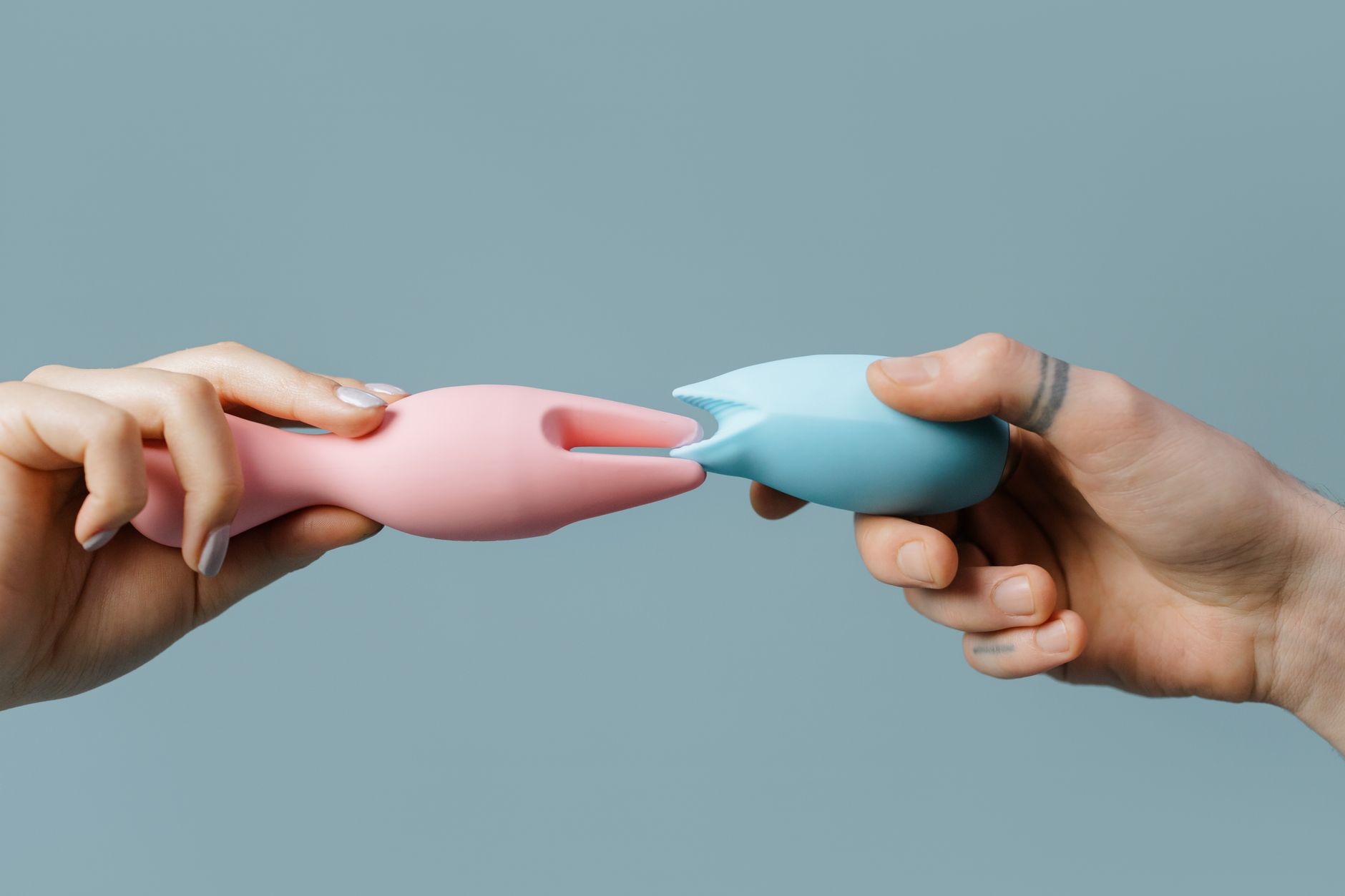
Let's be real about pleasure after divorce
Divorce rewires more than your logistics. It rewires your body's permission to feel good. For years, pleasure was tangled up with someone else. Their timing, their preferences, their presence. Now that they're gone, your nervous system doesn't quite remember how to relax into sensation without that familiar friction, or worse, without guilt.
That's not weakness. That's exactly what happens when intimacy gets tied to a person for a decade or more.
The good news is that pleasure isn't gone. It's just waiting for you to learn how to access it on your own terms. Lemon vibrators, particularly air-suction designs like the kind Lem Store offers, are exceptional tools for this specific transition because they're direct, unambiguous, and demand nothing from you except presence.
Why lemon vibrators matter when relearning solo pleasure
Solo pleasure after divorce isn't about replacing partnership. It's about reclaiming your body as your own territory. That distinction changes everything.
When you were partnered, sex was often about responsiveness. Responding to initiation. Responding to rhythm. Responding to someone else's arousal timeline. Your own sensation got folded into the package. Lemon clitoral vibrators cut through that noise because they speak directly to your body's language, not anyone else's.
Air-suction technology, which is what lemon vibrators use, stimulates nerve endings without the mechanical friction that requires you to psychologically "prove" you're aroused. You don't have to perform readiness. You don't have to build up steam to justify the sensation. The device does the work, and your body responds or doesn't, either way.
That permission to feel nothing and still touch yourself is actually the permission to feel everything.
The emotional setup: why timing matters more than technique
Here's something that doesn't get said often enough: you can't eroticize your body while you're still negotiating who gets the house or which holidays belong to whom. Pleasure requires a certain amount of cognitive space. Divorce eats that space alive.
Wait. I don't mean wait years. I mean wait until the acute legal and logistical chaos settles enough that you can spend 20 minutes alone without your phone pinging or your brain spinning on a custody schedule or an email from your ex's lawyer.
That threshold is different for everyone. Some people find it three months in. Some take two years. The point is: you'll know. You'll notice a moment where you get home, lock the door, and your first thought isn't "what's the next thing I have to handle." That's your signal.
When that space opens up, that's when lemon vibrators become genuinely useful instead of just another thing you're supposed to want to feel better.
Starting slowly: what your body actually needs
Sex after a long partnership often comes with baggage. Not always negative, but it's there. Your body remembers positions, rhythms, the texture of a specific person's skin. New sensation can feel like infidelity even when you're alone.
Start with no expectations. Seriously. No goal of orgasm. No performance metrics. Just sensation.
Take your lemon vibrator to bed with you on a night when you're not trying to accomplish anything. No wine to lower inhibitions. No attempt to "get yourself in the mood." Just you and 20 minutes of free time. Put it on the lowest setting. Let it run on your inner thigh for a minute. Somewhere that feels distant from the parts of your body that sex used to claim.
This does two things. It teaches your nervous system that touch doesn't automatically mean performance. And it teaches you what your current body actually responds to, which may be different from what your body responded to five years ago.
Some people find they prefer gentler sensation than they used to. Some discover they want much more intensity. This information matters because it separates who you were from who you are now.
Reframing pleasure as a solo experiment
After divorce, one of the most disorienting things is realizing that pleasure doesn't have to be justified by another person's desire. You don't need a partner to want you in order to want yourself.
That sounds simple. It's not, neurologically or emotionally. Your brain spent years linking arousal to being wanted. Now you have to learn to link arousal to wanting. They're not the same circuit.
Lemon vibrators are perfect for this because they make exploration feel purposeful without being goal-oriented. You're not waiting for someone else to notice or validate your pleasure. You're gathering data about your own body.
Try this: spend a few sessions exploring different patterns on your lemon vibrator without touching your genitals at all. Pulse it against your labia. Vary the intensity. Notice where the sensation concentrates. This is archaeology, not performance. You're rediscovering your own geography.
Once that feels normal and not fraught, add one more thing. Let your mind wander. Don't curate your thoughts. If fantasies show up, let them. If your ex's face shows up, notice that and let it move on. Your brain is catching up with your reality. It will get there.
When to graduate to partnered pleasure (if you want to)
Eventually, some people want to bring a partner into this new landscape. That's genuinely different from diving back into sex as a couple.
If you get there, here's what changes. Show your partner what you've learned about your body solo. Not as a performance, but as information. "I discovered I like this pattern of intensity." "My body responds better when I have more time to warm up." "I need to be in control of the pace right now."
This frames sex not as "getting back into it as a couple" but as "introducing a partner to the person you've become." That resets the power dynamic from "we used to do this together" to "here's what works for me now."
And if partnered sex doesn't show up for months or years, that's fine too. Some people find that solo pleasure is exactly what they needed, and partnerships come later, or not at all. Your lemon vibrator doesn't judge either trajectory.
Logistics: the practical side
StorageMatters. Keep your lemon vibrator somewhere private but accessible. A drawer you don't panic about someone opening. A locked box if you share custody and kids sometimes find things. The goal is to remove one more barrier between you and 15 minutes of solo time.
Water-based lubricant helps. Your body may not produce as much natural lubrication during this transition as it did when you were partnered, especially if you're in early divorce mode and your nervous system is still in fight-or-flight. Lube isn't a sign of anything. It's just infrastructure.
Clean your lemon vibrator before and after with warm water and mild soap. This isn't complicated, but it matters because it gives you a moment of intentional care. You're taking care of yourself, literally.
Battery or charging? Check before you need it. Nothing kills a moment of self-reconnection like fumbling for a cord.
The bigger picture: rebuilding trust in your own body
Divorce doesn't just end a partnership. It can shake your trust in your own judgment. You chose this person. How did that go wrong. That question lives in your body, not just your brain.
Solo pleasure with a lemon vibrator is a way of practicing trust in yourself again, in very small, very concrete doses. You decide when. You decide the intensity. You decide to stop. You follow through. Your body believes you because you're keeping your word to yourself.
That's the real work. Not orgasms. Not performance. Just slowly rebuilding the belief that you can listen to your own body and act on what it's telling you.
Over time, that practice bleeds into other parts of life. You get better at saying no to things you don't want. Better at asking for what you do want. Better at trusting that your instincts, even the ones that were wrong about your marriage, are still worth listening to.
Lemon vibrators are a tool for that work, not the work itself. But they're a surprisingly good one.
FAQ: Questions about solo pleasure after divorce
Is it normal to feel guilty using a vibrator after divorce?
Completely. You spent years associating pleasure with partnership. Your nervous system learned that pleasure requires another person's participation or approval. Using a lemon vibrator solo can feel like you're cheating on a relationship that doesn't exist anymore. That's not irrational. That's just what happens when your brain hasn't caught up with your changed circumstances. The guilt fades with repetition. Keep going anyway.
How long after divorce should I wait before exploring solo pleasure?
There's no timeline. Some people are ready three months in. Some take two years. The indicator is simple: can you spend 20 minutes alone without your brain spinning on logistics or resentment. If yes, you're ready. If no, give it more time. Forcing pleasure before your nervous system has space for it just creates more friction.
Can using a lemon vibrator mean I'm not interested in partnered sex anymore?
Not necessarily. Some people discover through solo exploration that they actually want partnered sex more, because they now know exactly what they need. Some discover they're happier solo. Some find they want partners but only under very specific conditions. There's no conclusion you're supposed to reach. You're just gathering information about yourself.
My body doesn't respond the way it used to. Is something wrong?
No. Divorce is trauma, even when it's necessary. Your nervous system has been in high alert. Your hormones shifted. Your body may be holding tension you don't consciously feel. This changes how sensation registers. Give yourself months of exploration before you conclude anything about your capacity for pleasure. Most of the time, responsiveness returns once your system settles.
Should I tell a new partner about my solo practice with lemon vibrators?
That depends on what you value in disclosure. Some people find it sexy and connecting to share what they've learned. Some prefer to keep that as their private reclamation. Neither is wrong. There's no obligation to confess. There's also no shame in being honest if it feels right for the relationship.
What if I use a lemon vibrator and nothing happens? Am I broken?
No. Sometimes your body needs more time. Sometimes you need a different angle or intensity. Sometimes you're just not in the headspace that day. Solo pleasure after divorce isn't about reliability. It's about showing up. The sensation will come when your nervous system is ready. Until then, you're still doing the work of reclaiming your body as yours.
The long view
Rebuilding pleasure after divorce isn't fast. It's not linear. Some weeks you'll feel open and curious. Other weeks you'll feel angry or shut down. That's the process working, not breaking.
Lemon vibrators are one small tool in that process. They're direct, unambiguous, and they ask nothing from you except presence. In the early months after divorce, when everything else feels negotiable and uncertain, that clarity matters.
Your pleasure belongs to you now. It always did, but now you have the space to remember that. Take your time. Your body will catch up.