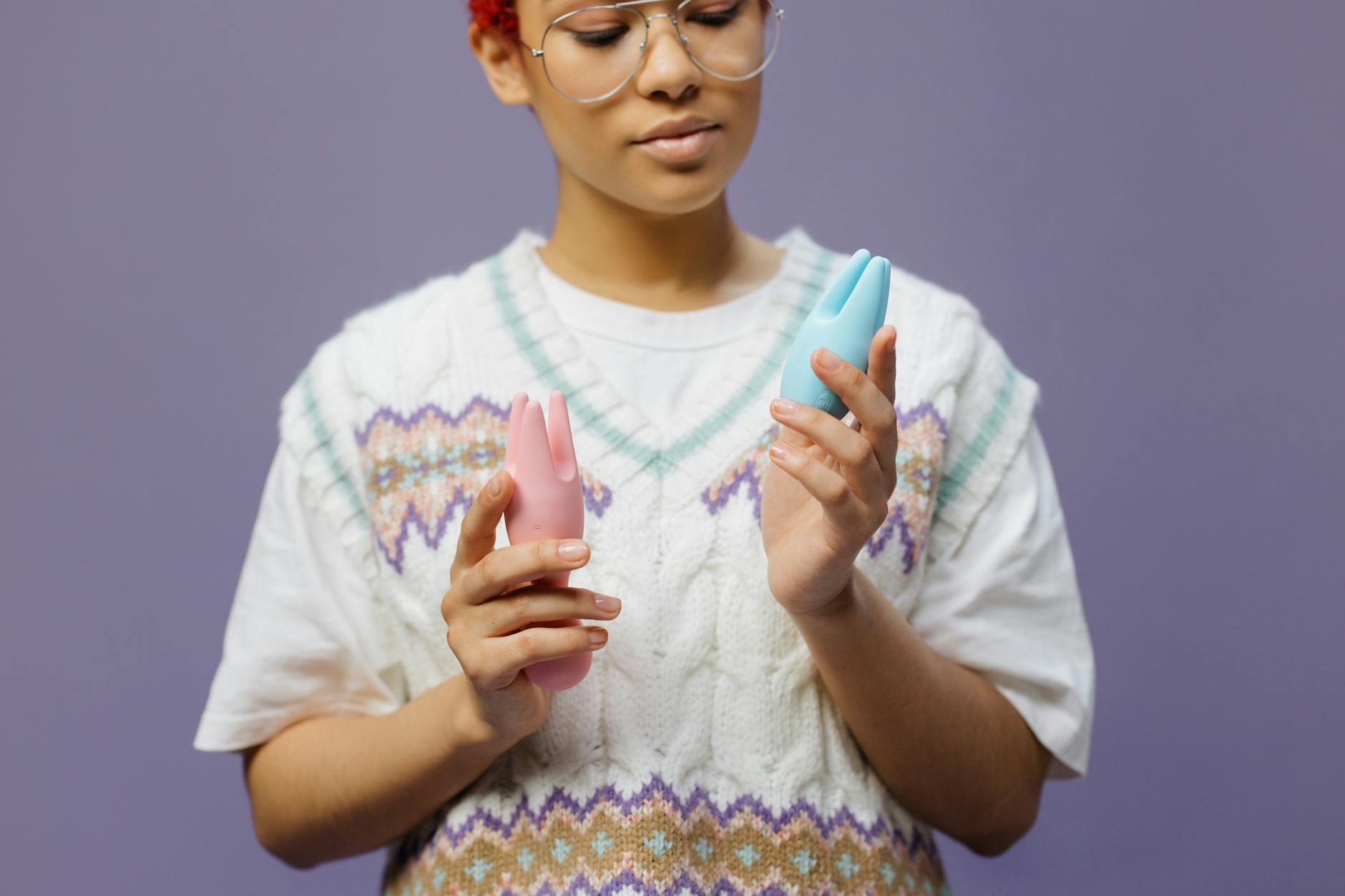
Let's be real about long-term desire
After five years, ten years, or twenty years with the same partner, pleasure doesn't disappear. It shifts. It gets quieter. You stop reaching for it because reaching used to feel like a risk. Maybe sex became routine. Maybe there's resentment sitting underneath. Maybe you're both exhausted. Maybe you've learned to protect yourself by disconnecting from your body a little, and now reconnecting feels unfamiliar or even scary.
Most people assume the solution is about rekindling things with their partner. But that's backwards. You have to reconnect with yourself first. That's where lemon vibrators enter the picture.
Why sensation goes silent in long-term relationships
There's a physiological part and a psychological part. On the body side, if you've spent years either not having sex or having the same kind of sex, your neural pathways for arousal actually get less traffic. That's not permanent. It's like a hiking trail that hasn't been used in a while. It's still there. It just needs walking.
On the mind side, something else happens. You build a protective distance. You stop noticing your own arousal cues because noticing them felt painful when sex wasn't happening or wasn't good. Over time, you stop reaching for that part of yourself at all. You're operating from the neck up. Your body becomes background noise.
Lemon vibrators are specifically useful here because they're external and predictable. They don't require you to already feel desire. They create the conditions for desire to emerge.
Starting with yourself, not your partner
This is important enough to say twice. Before you try anything with your partner, you need to rebuild your own pleasure map. Alone. No performance pressure. No one watching. No one's needs but yours.
Set a timer for thirty minutes when you're alone. Not rushed, not squeezed between chores. Tell your partner you need solo time if you need to. Lock the door. Silence your phone. This isn't selfish. This is maintenance.
Start with a lemon vibrator at the lowest setting. The Lem's design is helpful here because the suction pattern is gentler than traditional vibration, so you're not jumping straight to intense sensation. You're warming up your nervous system.
Spend the first five minutes just holding it, feeling the weight, maybe just letting the vibration travel across your inner thigh or labia without direct contact on your clitoris. Notice what texture of touch actually feels good. This sounds simple but most people have stopped paying attention to this after years in a relationship.
As you settle in, let your mind wander. Don't perform arousal. Don't try to come. Those are goals for later. Right now, you're just gathering information about what your body actually wants.
What to expect on the pleasure trail
First sessions are often disorienting, not transcendent. You might feel numb. You might feel awkward. You might feel frustrated because nothing's happening. All of that is normal and temporary.
If numbness shows up, that's your protection mechanism still working. Keep going. Sensation returns usually within three to five sessions when you're consistent. Don't expect explosive arousal. Look for small shifts. A slight warmth. A tiny flutter. Your body learning to feel again.
If awkwardness arrives, you're fighting your own protective story about yourself. I know that sounds abstract. Here's the concrete version: you've been telling yourself for years that you're not that person anymore, the person who masturbates, who wants, who feels. Now you're proving that story wrong to yourself. That's cognitively dissonant. It passes.
Consistency matters more than intensity. Three times a week with a lemon vibrator for fifteen minutes beats one desperate marathon session. You're retraining your nervous system, not chasing an orgasm.
When orgasm becomes possible (and when it doesn't matter)
Some people return to orgasm quickly. Others take weeks. Some never orgasm from a vibrator but feel reconnected to pleasure anyway. All three of those outcomes are fine. Don't let orgasm become another performance metric.
If you do come, notice what worked. The pressure? The pattern? Your thoughts? Did your partner cross your mind or were they absent? All of this is data. Write it down if you're the type who likes to track things.
If you don't come, that's genuinely okay. Pleasure isn't a binary. You're looking for that moment where your body wakes up and remembers it has a nervous system. That can happen with or without climax.
Bringing it back to your partner (if that's what you want)
After two to three weeks of solo practice, you'll have rebuilt your own arousal capacity. Now you can actually make a choice about partnered intimacy. Before this, you might have been going through motions. Now you have something to bring to the table.
Talk to your partner before anything happens. Not during foreplay. Not in the bedroom. Sit down and say something like: "I've realized I've disconnected from my own pleasure over time, and I'm working on reconnecting. I want to bring this back into our intimate life, but I need us to slow down and rebuild things together." Concrete beats vague.
When you do invite your partner into this, consider using the lemon vibrator together. Not as a replacement for other intimacy, but as a tool. They can hold it while you guide them. They can watch. They can be curious instead of goal-focused. This reframes sex from a performance you're both failing at into an exploration you're doing together.
The grief that sometimes arrives
As sensation returns, so sometimes does sadness. Years of not feeling can leave a quiet grief underneath. You might reconnect with your body and realize how much time you've spent disconnected. That's worth feeling, not pushing past.
If this grief feels big or stays, that's a sign that something deeper than pleasure-numbness is at work. Resentment, betrayal, or unresolved conflict in your relationship might need actual therapy, not just vibrators. That's not a failure. That's information.
Building a sustainable rhythm
Once pleasure starts returning, don't quit the solo practice. Keep it up. Weekly or biweekly, not as obligation but as maintenance. Your nervous system thrives on this kind of attention.
And if partnered sex is on the table, make it different than it was. Not every time has to have a lemon vibrator involved. But some of it should. Introduce it without apology. "I want to use this tonight" is a complete sentence. Your partner either wants to play or they don't, but they don't get to decide whether your pleasure matters.
The real benefit of lemon vibrators in long-term relationships isn't the vibration itself. It's that they force you to slow down. To pay attention. To ask yourself what you actually want instead of what you think you should want. That attention is what reconnects you to your partner, too.
People also ask
Can using a lemon vibrator on my own affect my ability to feel pleasure with my partner?
No. It's the opposite. Using a lemon clitoral vibrator solo actually sensitizes your nervous system, making you more capable of pleasure overall. You're not desensitizing yourself. You're rebuilding your arousal capacity in both solo and partnered contexts. The solo practice is literally training ground for the partnered version.
Should I tell my partner I'm using a lemon vibrator if we're trying to reconnect?
That depends on the specific relationship, but generally yes. Transparency builds trust faster than secrecy does. You don't need permission, but sharing it removes shame and invites your partner into the project of rebuilding intimacy together. If you're afraid of their reaction, that might point to a bigger relational issue worth addressing separately.
How long does it take for pleasure to feel normal again after years of disconnection?
Two to eight weeks of consistent solo practice is a realistic timeline. Some people feel shifts within days. Others need a full month before sensation returns. Consistency matters more than speed. Three fifteen-minute sessions a week beats sporadic longer sessions. Your nervous system is learning a new pattern, and that takes time.
Is it normal to feel awkward or even grossed out by my own body when reconnecting with a lemon vibrator?
Completely normal. After years of disconnection, your body can feel like a stranger's body. That discomfort usually passes within two to three sessions as you realize that your body is still yours and still capable of pleasure. If it persists beyond that, it might be worth exploring with a therapist why reconnection feels unsafe.
Can lemon vibrators actually improve long-term relationship satisfaction?
Yes, but indirectly. They improve the reconnection to your own body and pleasure, which then improves your capacity for presence and desire in partnered contexts. You can't offer genuine vulnerability and pleasure to a partner if you're not connected to that in yourself. The lemon vibrator is the tool. The real work is you deciding your pleasure matters.
What if my partner feels threatened by my use of a lemon vibrator?
That's information. A secure partner understands that your solo pleasure and partnered pleasure aren't in competition. If your partner feels threatened, that's worth a conversation about what's underneath that threat. Usually it's insecurity or a misunderstanding of what sex toys mean. Sometimes it points to deeper issues in how you relate to each other that deserve actual attention.
One more honest thing
Reconnecting to pleasure after years of disconnection isn't just about sensation or even orgasm. It's about deciding that you matter. That your body matters. That joy in your body isn't selfish or inappropriate or frivolous. It's necessary.
When you pick up a lemon vibrator, you're not just picking up a toy. You're saying yes to yourself again. That's the real shift. Everything else follows from there.
If you're ready to start this work, you already know what step one is. But if you have questions about how to navigate this conversation with your partner or in your own head, we're here. Get in touch.