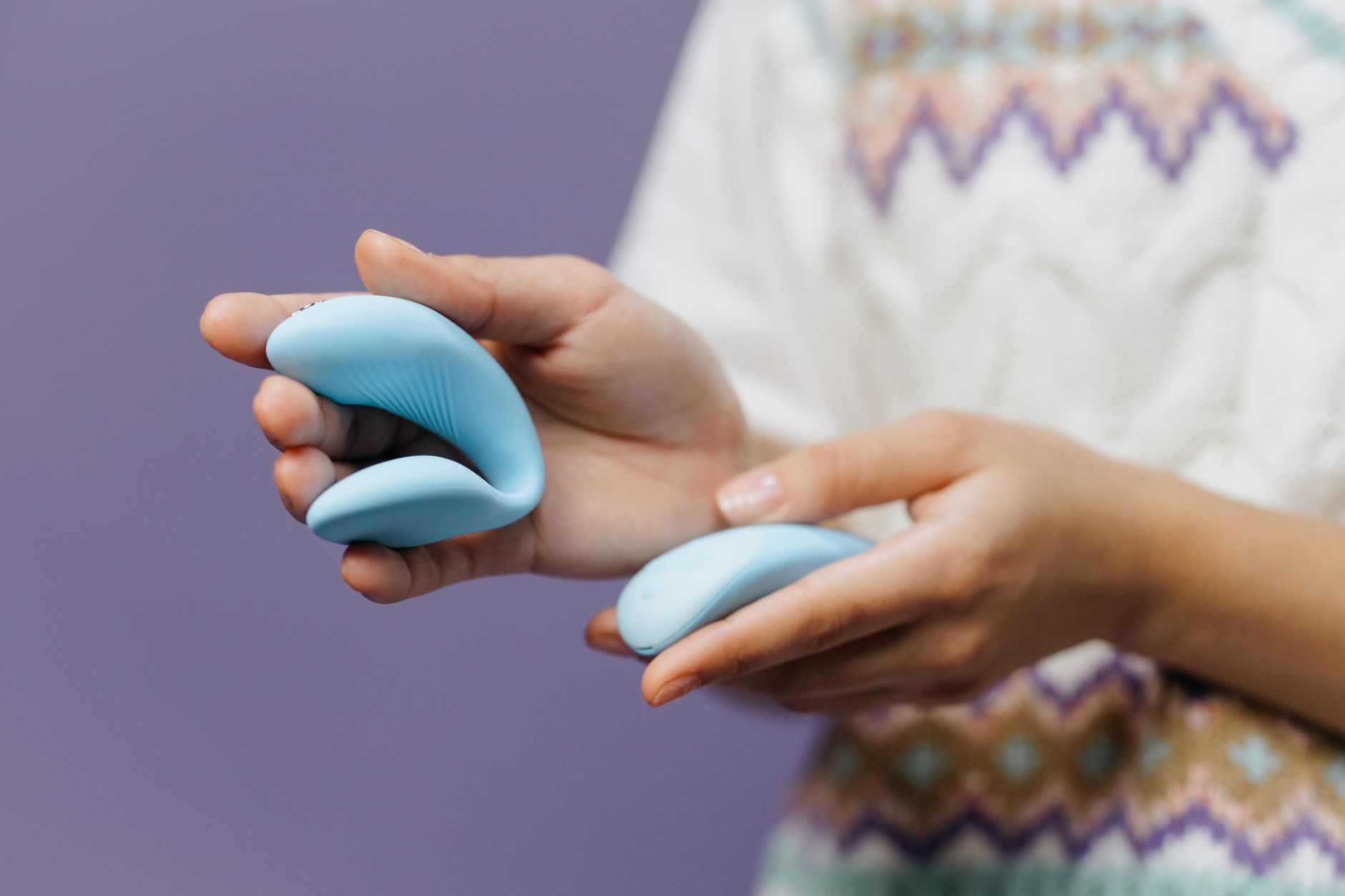
Here's what nobody tells you about solo toys in a relationship
You own a lemon vibrator. Your partner doesn't know. And you're wondering if that's a problem, or just a normal part of having your own body and your own life. Both things can be true at the same time. Let me walk through what actually matters here, what doesn't, and how to make decisions that feel right for you specifically.
Why you might want to keep it private
There are real, legitimate reasons to keep a lemon vibrator or any clitoral vibrator to yourself. None of them mean you're doing anything wrong.
Some partners have insecurity baked in around sex toys. They interpret solo pleasure as criticism of their sexual performance, even when that's not what's happening at all. You using a vibrator has nothing to do with whether your partner is a good lover. It's neurology. It's anatomy. But if your partner isn't at a place where they can hear that without their feelings getting hurt, introducing a lemon sucker into the conversation becomes less about pleasure and more about managing someone else's emotions. That's exhausting, and you shouldn't have to do emotional labor just to access your own body.
Some relationships have a power dynamic where one person gets to decide what's acceptable. If you're in that situation, privacy isn't about dishonesty. It's about safety and autonomy. Your pleasure matters, even if your partner doesn't agree.
Some of us just like having something that's ours. A space of our own, literally. A secret that doesn't hurt anyone. There's nothing immature or relationship-threatening about that.
The storage question (and it's bigger than you think)
The first practical barrier is: where does a lemon vibrator live when you're not using it?
If you're sharing a bedroom or a bathroom, your options are limited. A nightstand drawer is obvious. Most partners won't open it, but some will. A bathroom cabinet behind other stuff can work. Some people keep theirs in a gym bag, a work bag, or a locked box. A few options that actually work: a zippered cosmetics case inside another bag, a hatbox on a shelf (nobody looks in hatboxes), or a small lockable box positioned where it doesn't scream "sex toy storage."
The reality is that if your partner actively searches for it, they'll probably find it. But most partners aren't searching. They're respecting privacy boundaries they know exist, whether stated or unstated. If your partner respects your privacy in other areas of your life (your phone, your journal, your locked diary), they'll probably respect this too.
One thing that helps: using a generic case or storage solution. A lemon vibrator in a silk pouch in a drawer reads differently than a vibrator sitting out in plain sight. The container creates a tiny boundary that says, "This is a private thing," and most people honor that without asking questions.
Timing and rhythm
If you're using a lemon vibrator while your partner is home, the timing matters. This isn't about shame. It's about logistics and mutual respect.
Best windows: when your partner is in the shower, at the gym, on a work call, asleep in another room. Not because you're doing anything wrong, but because privacy and focus are intimately connected. You don't want to be jolted by someone coming through the door. You want uninterrupted time with your own pleasure.
Sound is worth thinking about. Most lemon clitoral vibrators like those from Lem Store are quieter than older models. If you're in separate rooms or there's white noise (a fan, music, TV), you're likely fine. If you're in a one-bedroom apartment with thin walls and a partner who's not busy, the timing becomes more deliberate.
The awkward part: you'll probably have a few close calls. Your partner comes home earlier than expected. Someone knocks on the door. Your phone rings. Those moments are anxiety-producing, but they're also totally survivable. Stash the vibrator, take a breath, and open the door. You weren't doing anything illegal or immoral.
Whether to tell them
This is where the relationship piece gets real, and where there's no single right answer.
Some people believe that true intimacy means full transparency. They'd want to know. They'd want to understand what feels good for you. For them, the vibrator becomes a shared tool in understanding your body, even if they're not using it with you. If you're in a relationship like that, there's a case for eventually mentioning it. Not as a confession. As information. "I've been exploring solo with a clitoral vibrator, and it's really helped me understand what works for my body."
Some people have partners who aren't there yet emotionally. They hear "vibrator" and go into a spiral of insecurity, rejection, or jealousy that has nothing to do with the vibrator and everything to do with their own wounds. In that case, telling them isn't generosity. It's volunteering to manage their emotions and justify your own body. That's not fair to you. Your pleasure doesn't need his or her permission.
Some relationships exist in a comfortable middle: you both know that solo pleasure happens, you both have privacy, and you don't need to document or discuss the details. You might say, "I'm taking some time to myself," and that means what it means without elaboration. There's trust without obligation to report back.
Here's the test: if you told your partner about your lemon vibrator right now, would the conversation be about your pleasure and autonomy, or would it become about managing their feelings? If it would become about their feelings, that's information about your relationship dynamic. Not a reason to stay silent forever, necessarily. But a reason to be thoughtful about timing and context.
The relationship check-in
If you're in a relationship where you feel like you need to hide basic parts of your sexuality, that might be the bigger issue worth examining. I don't mean the vibrator specifically. I mean the dynamic that made you feel like you couldn't have it openly.
Sometimes secrecy is protective and healthy. Sometimes it's a sign that intimacy or communication has eroded. Only you know which is true in your situation.
If you want to eventually move toward more openness around pleasure, it doesn't have to start with "I bought a vibrator." It can start smaller. "I've noticed I need more time alone to feel good about myself." "I'm thinking more about what my body needs." "Can we talk about pleasure in a way that feels less like performance?" You're building a foundation where the vibrator becomes just one part of a bigger conversation about autonomy and intimacy.
If you're someone who prefers privacy and that works for you and your relationship, that's equally valid. You don't owe your partner narration of every solo moment. Solo pleasure and partnered pleasure don't have to be the same conversation.
Using it without guilt
The most important part: when you actually use your lemon vibrator, let yourself enjoy it without the mental soundtrack of shame or secrecy. That voice that says you shouldn't be doing this, or you should feel bad, or this means something about your relationship. That voice is usually rooted in old messaging about women's pleasure, not reality.
Your pleasure is yours. A lemon clitoral vibrator is a tool for your body, your sensation, your orgasm. That fact doesn't change based on whether anyone else knows it exists. Whether you eventually tell your partner or keep it private, the experience itself deserves your full attention and zero apology.
Your body matters. Your sensation matters. Your autonomy matters. The vibrator is just a really good way to honor all of that.
FAQ
Should I tell my partner I have a lemon vibrator before or after we get married?
Neither of those timelines is mandatory. If marriage would mean living in closer quarters or shared spaces, and your partner is likely to eventually discover it, that might be a reason to have a conversation earlier. But you're not obligated to disclose your masturbation habits as a prerequisite to commitment. If there's already foundation of sexual communication between you, introducing it as "I've found something that really works for my body" feels more collaborative than defensive. If communication is already strained, a vibrator conversation probably won't fix that.
What if my partner accidentally finds my lemon vibrator?
Take a breath. Let the awkwardness sit for a minute. Most of the time, a partner finding a vibrator is less catastrophic than you're imagining right now. If they bring it up, you can say, "Yeah, I've been exploring that on my own. It helps me understand what I like." If they don't bring it up and act like it never happened, you both have an unstated agreement that it's your private thing. You don't need to explain yourself to death just because it was discovered.
Can using a vibrator secretly damage my relationship?
Not the vibrator itself. But persistent patterns of secrecy across major areas of life can erode trust over time. The question isn't really about the toy. It's whether there's room in your relationship for you to have parts of yourself that are just yours. If the answer is no, that's a relationship pattern worth examining, with or without the vibrator.
Is it weird that I like using a lemon vibrator alone more than with my partner?
No. Solo pleasure and partnered pleasure activate different parts of your brain and body. Sometimes you want the focus of complete autonomy. Sometimes you want the intimacy and witness of a partner. Both are normal. Both are good. One isn't better than the other.
What if my partner asks why I need a vibrator if they're satisfying me?
This is the insecurity question disguised as a logical one. The answer is: a vibrator and a partner aren't competing. A vibrator is a tool for understanding your own body, your own nerves, your own preference. Your partner might be great. The vibrator might be great. Both things can be true. If your partner is asking this question from genuine curiosity, you can say that. If they're asking from hurt, you might need to have a bigger conversation about what they need to feel secure, which is separate from what your body needs.
Should I feel guilty about solo pleasure when I'm in a committed relationship?
No. Not a little. Not sometimes. Just no. Solo pleasure is part of sexual health. It's not a referendum on your relationship or your partner's performance. Guilt about your own body is something you inherited. You get to set it down.
The bottom line
Your lemon vibrator is yours. Whether your partner knows about it, doesn't know about it, or finds out about it down the line, that fact doesn't change. What matters is that you're using it without shame and that you're building a relationship where your own pleasure and autonomy matter. Sometimes that means privacy. Sometimes it means openness. Usually it means some combination of both, and figuring out what works for your relationship specifically.
For more on navigating pleasure with a partner, I'd recommend reading about how lemon clitoral vibrators work when arousal takes longer to build, which often comes up in conversations about solo versus partnered pleasure. If you're considering telling your partner and want to understand the emotional side better, the piece on how to use lemon vibrators when you have a new partner and feel self-conscious walks through vulnerability and communication. And if you're thinking about pleasure more broadly in your relationship, how to use lemon vibrators when foreplay feels rushed with your partner addresses timing and rhythm in a partnership context.
Your pleasure matters. So does your privacy. Both can exist in the same relationship, and in the same person.