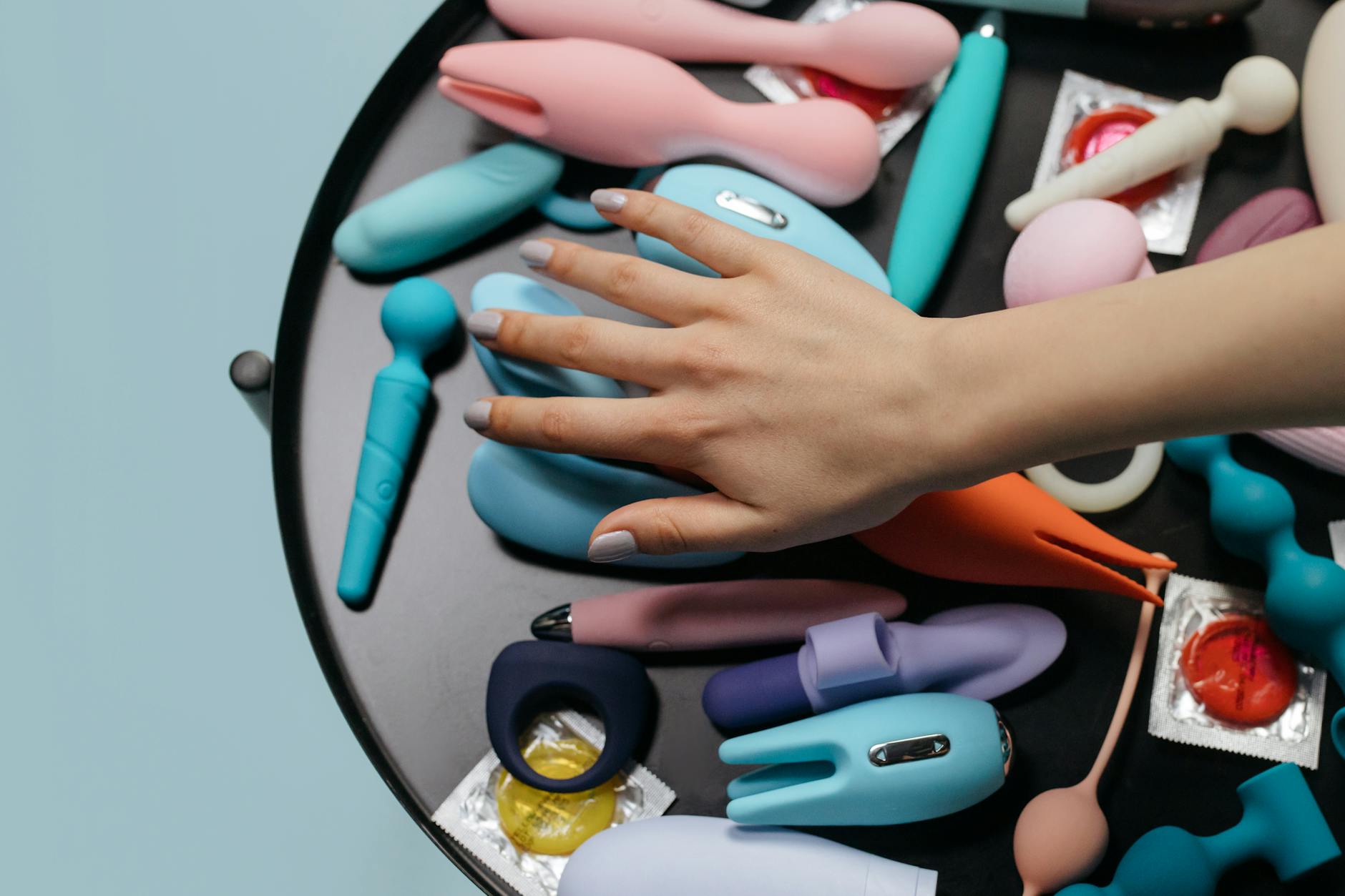
Here's the thing nobody says out loud
One partner wants foreplay to last thirty minutes. The other wants to get to the main event in five. Neither of them is wrong, and both feel rejected every single time. This is one of the most common friction points I see in couples who genuinely love each other, and it's almost never about the foreplay itself. It's about what the different paces feel like: One person feels desired and unhurried. The other feels pressured and performative.
A lemon clitoral vibrator doesn't fix mismatched desire, but it does something almost as useful. It gives you a third option that doesn't require one person to fake it or the other to feel guilty.
Why foreplay mismatch happens (and why it's not laziness)
People with vulvas typically need 15 to 30 minutes of buildup before their body is genuinely ready for penetration. People with penises often reach arousal in 2 to 5 minutes. This isn't a personal failing or a sign anyone doesn't care. It's physiology.
But here's where it gets complicated. If the faster partner initiates while the slower partner is still at 20 percent, the slower partner feels rushed. If the slower partner asks for more time, the faster partner feels like their arousal is a problem. Both feel unseen.
Most couples try to solve this by extending foreplay itself. And sometimes that works. But honestly, it often just means both people are performing longer. The faster partner is waiting, the slower partner is trying to speed up, and nobody wins.
What changes when a lemon vibrator enters the picture
Let's say your partner wants you ready in ten minutes, but you need thirty. Instead of that being a stalemate, you both start together with a clitoral vibrator like a lemon sucker. Your arousal accelerates. Their arousal continues on its normal timeline. You're both genuinely turned on at roughly the same moment.
The math is this: foreplay with a partner takes X minutes. Add a lemon clitoral vibrator, and you're both physiologically synchronized in about half that time. You get what you need (full arousal). They get what they need (a partner who's as ready as they are).
The other thing that shifts is the dynamic. When foreplay is just hands and mouths, there's an unspoken pressure to perform. Are you touching them right? Are you making enough noise? With a vibrator in the mix, you're both focusing on one thing: sensation. The pressure dissolves.
How to introduce this without making it weird
If your partner has never used a vibrator together, don't spring it on them mid-session. That feels like a plot twist nobody asked for. Instead, have an actual conversation. Something like: "I love what we do, and I also want us to be on the same page about timing. I'm thinking about using a clitoral vibrator during foreplay so we both reach that readiness point together. Would you be open to that?"
Most people say yes immediately. Some say "let me think about it." A few say no, and that's information too.
If they're hesitant, ask what the resistance is about. Usually it's one of three things.
"I'll feel replaced." A lemon vibrator isn't replacing you. It's doing something your hand alone can't do as efficiently. You're still the person initiating, making eye contact, and present. The vibrator is just a tool that lets both your bodies cooperate.
"I don't want to use toys in our bed." This is about comfort and identity, not logic. Listen to it. Maybe start with just watching you use one on yourself while they're beside you. Presence can shift perception over weeks.
"I worry I'm not enough." This one needs reassurance that's genuine. The vibrator isn't a reflection on their ability to turn you on. It's about physiology matching up. You still want them. You're just removing a friction point.
The exact pattern that works for most couples
Here's what I recommend to partners in this situation:
Start with whatever you'd normally do. They're kissing you, touching you, and you're touching them back. You're building arousal the old-fashioned way. At about the five-to-seven-minute mark, introduce the lemon clitoral vibrator. Use it on yourself while they continue with their hands or mouth elsewhere. It's not a replacement for their touch. It's an accelerant.
Most people find that this rhythm (hands plus vibration) gets them to full arousal in about 12 to 15 minutes total. By then, both partners are genuinely ready and present.
The key is communication during, not just before. "That feels good" or "a little slower" or "keep doing that" lets your partner know you're still with them. The vibrator isn't making you distant. You're just giving your body what it needs to catch up.
The psychological shift that matters most
When you and your partner are synchronized, the entire experience changes. You're not rushing. You're not waiting. You're not performing or accommodating. You're both in the same moment with the same level of readiness.
That removes a surprising amount of resentment that builds up slowly over months and years. You know the kind. "They never want to spend time on me" or "I always feel like they're impatient." These narratives survive because the timing mismatch gives them evidence. A lemon clitoral vibrator doesn't solve every relationship problem, but it does solve this one specific thing that affects trust and desire.
When this approach doesn't work
If you introduce a clitoral vibrator and the resistance stays firm, or if the conversation reveals something deeper ("I just don't feel attracted to you anymore"), then you're dealing with something bigger. That's when couples counseling or a conversation about the actual relationship becomes the real work. A vibrator can't fix that, and I wouldn't want you to think it could.
But for partners who genuinely love each other and are just mismatched in arousal timing, this shifts everything. You're no longer fighting physiology. You're working with it.
When both of you want to use one together
Some couples discover they both like clitoral vibrators in the mix. Maybe you use a lemon vibrator on yourself while your partner uses one too, or takes turns. Or one partner uses a lemon sucker on the other during foreplay and penetration.
The research on couples using vibrators together is limited, but what exists shows increased satisfaction and pleasure across the board. More importantly, couples report feeling more creative, less bored, and more connected because they're exploring together instead of hiding their desires.
The realness check
Introducing a vibrator won't fix a relationship that's already broken. It won't make a partner more attentive if they don't care. But if you're in a genuinely loving partnership where the only friction point is timing, a lemon clitoral vibrator can be the difference between feeling desired and feeling accommodated. And that matters way more than most people admit.
If you're nervous about this conversation, remember that most people feel relieved when someone brings it up first. Your partner probably already knows the timing is off. They've probably felt your frustration even if you haven't said it. Naming the problem and offering a solution together is actually one of the most intimate things couples do.
FAQ: Foreplay timing and clitoral vibrators
Can using a vibrator make my partner feel like they're not enough?
Not if you frame it correctly. The conversation should be: "I want us to be ready at the same time so we both feel great," not "I need this because you're not doing it right." Most partners who feel secure in the relationship understand that physiology isn't personal.
How long does it actually take to synchronize arousal with a lemon clitoral vibrator?
Most couples report reaching mutual arousal in 10 to 15 minutes when a vibrator is part of foreplay, compared to 25 to 40 minutes without one. That's because clitoral stimulation accelerates arousal for people with vulvas without affecting the timeline for people with penises, so you're not lengthening anything. You're just catching up.
Should I ask my partner to use the vibrator on me or do it myself?
Try it both ways. Some couples prefer the person using the vibrator to control it themselves so they can focus on sensation and feedback. Others love the intimacy of a partner doing it. Neither is more correct. What feels good is the only metric that matters.
What if my partner wants to use a vibrator but I don't feel the need?
Then you don't need a vibrator in foreplay. Some people feel completely satisfied with hands and mouths alone, and that's genuinely fine. The goal isn't "vibrators for everyone." It's "whatever gets both of you to a place of mutual readiness and pleasure." If you're already there, great.
Can using a lemon sucker or other clitoral vibrator during penetration make orgasm harder to reach?
Not for most people. In fact, many report that clitoral stimulation during penetration makes orgasm easier and more intense. The risk is that if you rely only on vibrator stimulation, some partners find partnered pleasure without it feels less intense by comparison. The fix is variety. Don't use the vibrator every single time. Mix it up.
Is it weird to ask my partner to slow down during foreplay to match my arousal timeline?
Not at all. In fact, many therapists recommend it. You could say, "I love what you're doing. I just want us to take a bit longer so my body catches up to my brain." Most partners are relieved to hear this because it takes the guesswork out of pacing. The alternative is using a vibrator, which does the same job just faster and with less talk.
The real win
Foregone the narrative that something is wrong with you if your arousal timeline doesn't match your partner's. It's not wrong. It's just different. A lemon clitoral vibrator gives you a tool to bridge that gap without resentment, guilt, or performance pressure. That's worth the conversation, honestly.