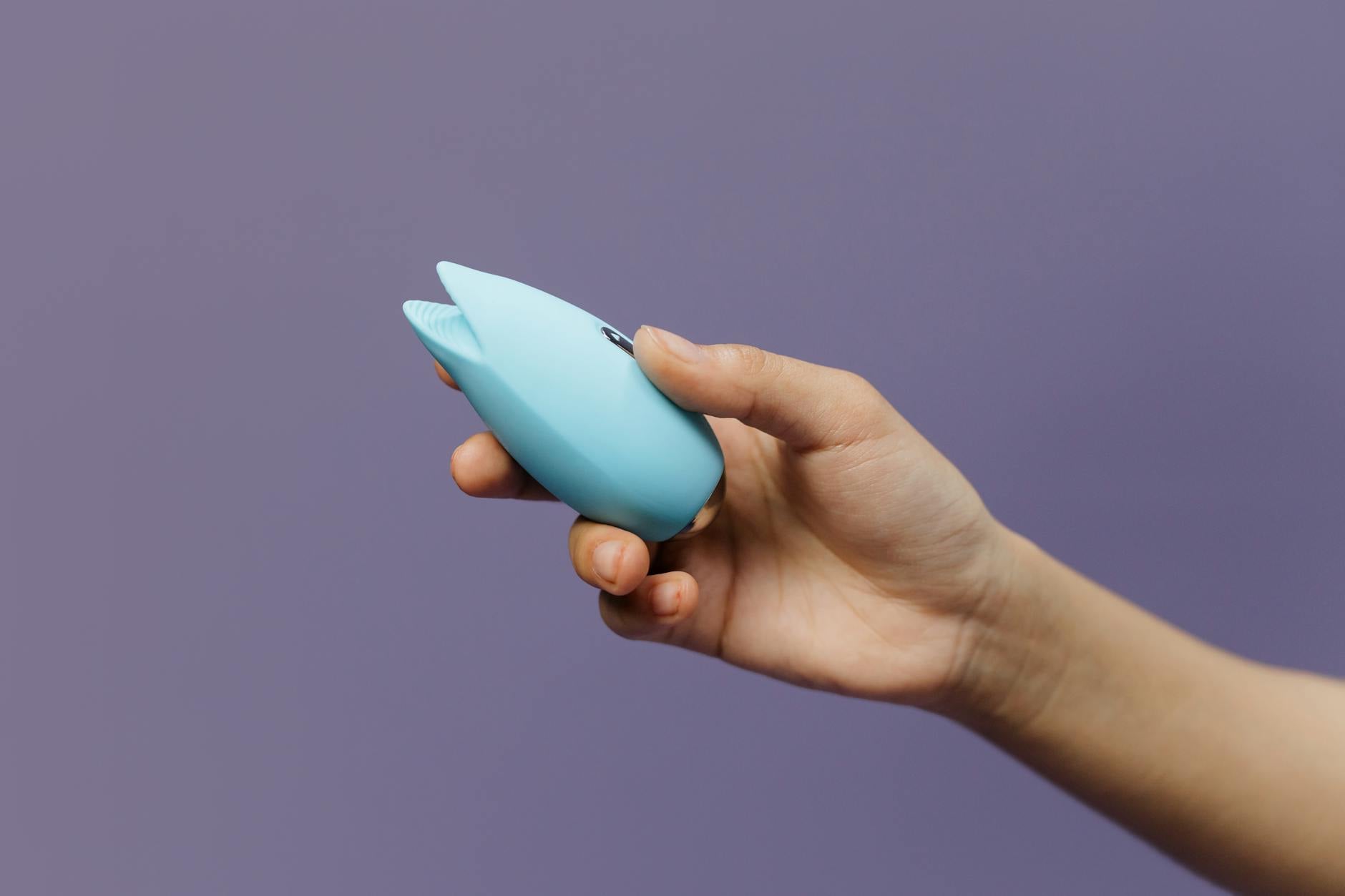
Honestly though, if you're using barriers with a lemon clitoral vibrator, you're already thinking about safety more than most people. The question you're asking now is fair: does a condom change how the suction and sensation actually feel? And if so, what do you do about it?
Lemon vibrators, including the Lem, use air-pulse suction technology instead of traditional vibration. The device creates a seal around the clitoris and delivers rhythmic pulses of suction, which stimulates the entire clitoral structure. Not just the external part.
That seal is everything. When suction works properly, you're not feeling vibration against the surface of your skin. You're feeling a deeper, broader sensation that pulls inward. It's one reason people often report that lemon clitoral vibrators feel wildly different from traditional vibrators.
A barrier changes that seal and, in turn, changes the sensation.
If you're using an external condom or a barrier dam on a lemon vibrator, here's what shifts.
First, the seal becomes less complete. The condom adds a layer of material between the suction cup and your skin. This means the device can't create quite as tight an air seal, and that reduces the suction intensity you feel. It's not that the vibrator stops working. It's that the sensation becomes shallower and more diffuse.
Second, the condom dampens the direct sensation. The silicone or latex material muffles the precision of the pulse. Some people describe it as feeling like the vibrator is working through a pillow rather than directly on skin. It's still present, just less crisp.
Third, friction changes. Without a barrier, the Lem and your skin create a smooth, sealed surface. A condom introduces texture and slight drag, which can feel either more padded or slightly scratchy depending on the material. Water-based lubricant helps here.
Fourth, you lose direct heat transfer. Silicone toys warm up as you use them. A barrier blocks that warmth from transferring to your body, so the experience stays cooler and more clinical.
The bottom line: most people feel about 30 to 40 percent less intense sensation when using a lemon clitoral vibrator with a condom compared to without one.
Less sensation doesn't mean no sensation. It means you may need to adjust your approach.
If you rely on patterns 4 and 5 (the stronger settings) without a barrier, you might find that pattern 4 feels too subtle with a condom. Some people step up to pattern 5 or even alternate between them. Others find they prefer the softer experience a barrier creates, especially if they're sensitive to direct suction.
This is also true for positioning. Without a barrier, you can angle the device to find your exact most sensitive spot with minimal trial and error. With a barrier, that precision gets a bit looser, so you may need to try a few angles before you land on what works.
Timing matters too. Because sensation is reduced, warm-up time becomes even more important. Your body takes longer to recognize and respond to the stimulus. Budget an extra 5 to 10 minutes if you're using a barrier and lemon vibrator together.
Not all barriers feel the same, and some work better with suction toys than others.
Latex condoms offer thicker material, which dulls sensation more noticeably but provides a secure seal. If you go this route, use plenty of lube.
Polyisoprene condoms (latex-free, like Skyn) are thinner and more responsive. Sensation is slightly better preserved than with latex, though still reduced compared to unbarriered use.
Polyurethane condoms are the thinnest option and do the least dampening of sensation. If sensation preservation is your priority, these are worth trying. They also warm up faster than latex or polyisoprene.
Barrier dams (latex or nitrile sheets) change the calculation entirely because they cover a larger surface area and create more distance between the suction cup and your body. The effect is more diffuse but also more gentle. Some people find dams feel less claustrophobic than condoms.
Honestly, if sensation with a barrier is a real concern for you, it's worth testing different materials to see which one feels best. What feels flat to one person feels perfectly comfortable to another.
Without a barrier, water-based lubricant helps with comfort and smoothness.
With a barrier, lube is essential for two reasons: it helps the condom or dam sit closer to your skin (reducing that air gap), and it cuts down on the slight friction that latex or nitrile can create.
Apply lube generously on both the outside of the barrier and the rim of the suction cup. This helps the seal sit tighter and feel less like a muffling layer. Silicone-based lube is thicker and stays put longer, but it can damage silicone toys. Stick with high-quality water-based options like Sliquid or Yes.
If you're using barriers because you're exploring with a new partner or a partner you haven't had fluid-bonded sex with, there's a relationship aspect here too.
Some people feel momentarily disappointed when they try a lemon clitoral vibrator with a condom for the first time and notice the sensation is muted. That's normal. What matters is not demonizing the barrier experience. Barriers aren't a downgrade. They're what responsible pleasure looks like when you're navigating STI risk or other safety variables.
Reframing it in your own mind (and with your partner, if you're together) as "this is a different experience, not a worse one" makes a huge difference. Some couples actually prefer the sensation profile of barriered use because it feels less intense and more intimate.
Start at a higher pattern setting than you'd normally use. If you usually gravitate toward patterns 2 and 3, begin with pattern 4 when using a condom.
Take your time. Arousal and sensation build slower with a barrier, so don't rush the warm-up phase.
Experiment with angles and positioning more than you might without a barrier. The seal is less precise, so finding the exact spot requires a bit more active exploration.
Use plenty of lube. Not just a coating. Enough that things feel slick and the barrier sits flush against your skin.
Consider your barrier choice. If sensation is important to you, polyurethane or polyisoprene options reduce dampening compared to traditional latex.
If you're using this with a partner, let them know what you're experiencing. "The sensation feels different, not bad, just different" opens the door for them to adjust what they're doing on their end too.
If you're in a committed, mutually monogamous partnership and you've both been tested for STIs, moving to barrier-free use is a choice you can make together. Some people find that the jump in sensation when they first go unbarriered after consistent barrier use is genuinely surprising. There's no rush though. Barriers are perfectly fine long-term, and lots of people use them that way.
The point is that sensation with a barrier and a lemon clitoral vibrator is not a permanent state. It's a variable you control based on your health, your relationship status, and your preferences.
Yes, but wait a beat. Let the condom settle and apply lube first. This helps it sit closer to your skin and reduces the air gap that deadens sensation. Jumping straight in before lube is applied often feels uncomfortable or ineffective.
Slightly. Thinner brands (Skyn, LifeStyles Elite) preserve sensation better than heavier-duty options like Durex. The material thickness matters more than the brand itself. If you're sensitive to sensation loss, test a few thin polyurethane or polyisoprene options.
That usually means the seal isn't tight enough, which brings you back to lube and fit. Make sure you're using enough water-based lube on the outside of the condom and the rim of the suction cup. If it still slips, try a snugger-fit condom or a barrier dam instead.
No. Silicone lube damages silicone toys, including the Lem. Stick with water-based lube even when using a barrier. The lube doesn't need to last as long when there's a barrier anyway.
No. It's entirely due to the physical barrier. Once you remove the condom, sensation returns to normal immediately. The toy itself isn't damaged or changed.
Unless you have a specific health reason, no. Barriers are primarily for partnered sex or when navigating STI risk. For solo use, barrier-free is simpler and feels better. If you do want to use one for hygiene reasons, that's fine too.
Lemon vibrators and barriers absolutely work together. The sensation shifts, but it doesn't disappear. You adjust your approach. a bit more lube, maybe a pattern setting up, definitely some patience on warm-up. And you're fine. Your pleasure matters whether you're using a barrier or not. The barrier is part of taking care of yourself, and that's something to feel good about, not resentful toward.