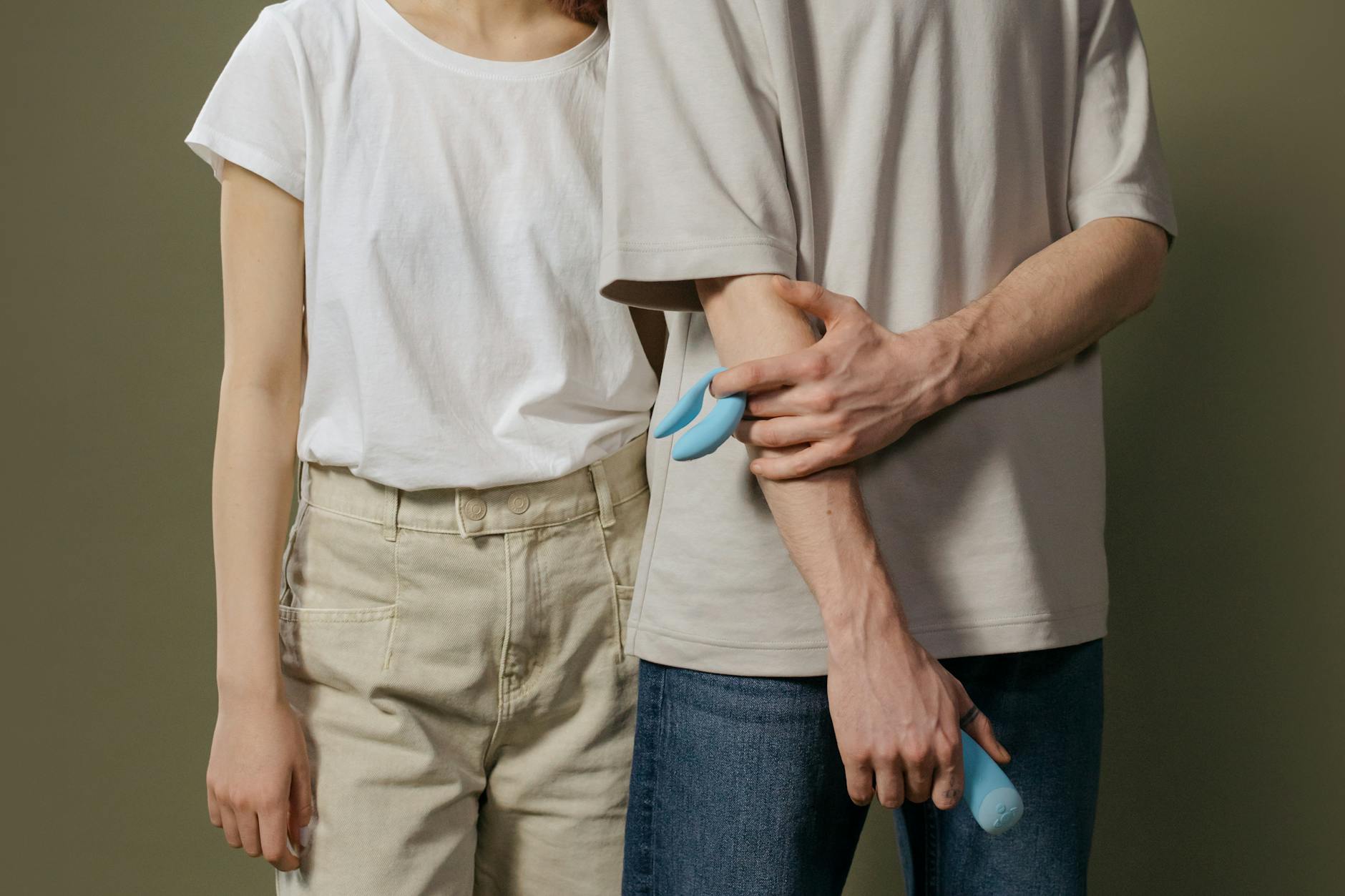
Here's the thing about lemon vibrators in partnered play
You know how your lemon clitoral vibrator feels one way when you're alone, then feels wildly different when your partner is there? That's not your imagination. Your body actually responds differently. The sensation isn't changing. Your nervous system is.
In fact, research on partnered arousal shows that the presence of another person alters perception of physical sensation by up to 40 percent, depending on trust, attention, and psychological state. That's a huge shift. And it matters for how you experience a lemon vibrator, a lemon sexual toy, or any clitoral vibrator.
I've worked with dozens of couples who think there's something wrong with their lemon sucker because the intensity suddenly feels too much, or too shallow, or just off. Usually what's shifted isn't the toy. It's the context.
Why presence changes everything (the neuroscience part)
When you're using a lemon vibrator alone, your brain is doing one job: processing sensation and pleasure. It's focused, singular. Your parasympathetic nervous system is fully engaged. You're relaxed. Your pelvic floor is loose. Arousal can build steadily.
When your partner is there, your brain splits attention. Part of you is still in sensation. But another part is monitoring their reaction, worrying about how you look, timing your sounds, thinking about whether you're taking too long. That's a real thing. It's called spectatoring, and it pulls your nervous system toward alertness instead of relaxation.
Your pelvic floor tightens. Your breathing gets shallow. And suddenly that intensity setting that felt perfect alone feels like too much. Or the opposite happens: you need more intensity because your body is less responsive overall.
The suction from a lemon vibrator works because of negative pressure and the specific nerve pathways it stimulates. When your pelvic floor is clenched, the suction cup has less give. When you're in full fight-or-flight, the sensation can feel almost jarring instead of pleasurable.
What actually happens to sensation perception
Think of it this way. Your nervous system has a baseline sensitivity setting. When you're alone, that baseline is calm. You notice subtle shifts in sensation. You can feel the difference between pattern 2 and pattern 3 on your lem vibrator.
When your partner is present, that baseline shifts up. Your sympathetic nervous system (the one that kicks in under any kind of stress, including the mild stress of being watched or wanting to perform) increases your threshold. Sensation has to be stronger to break through.
This is why someone might say, "When I use my lemon vibrator alone, setting 3 is perfect. But with my partner, I need at least setting 5." It's not that the toy is different. It's that your nervous system is operating at a different baseline.
There's also a timing piece. When you're alone, you know exactly when you're about to orgasm. You've mapped your own response. With a partner, there's unpredictability. They might touch your breast. They might kiss your neck. They might say something that either turns you on or pulls you out of the moment. That unpredictability can heighten sensation or fragment it.
The attention piece (it's bigger than you think)
Here's something that comes up constantly in couples therapy: attention is an aphrodisiac. When your partner is fully present, watching you, listening to you, wanting to understand what brings you pleasure, it can amplify sensation itself.
But that works both ways. If you feel watched in a way that triggers self-consciousness, the opposite happens. Your body tightens. Pleasure dims. A lemon clitoral vibrator that felt responsive solo suddenly feels distant.
Many people describe it as the difference between "being present in my body" and "being in my head." When your partner is genuinely tuned in to you (not checking their phone, not performing their own excitement, actually curious about your pleasure), your nervous system registers that as safe. Safety allows the pelvic floor to relax. Relaxation changes everything.
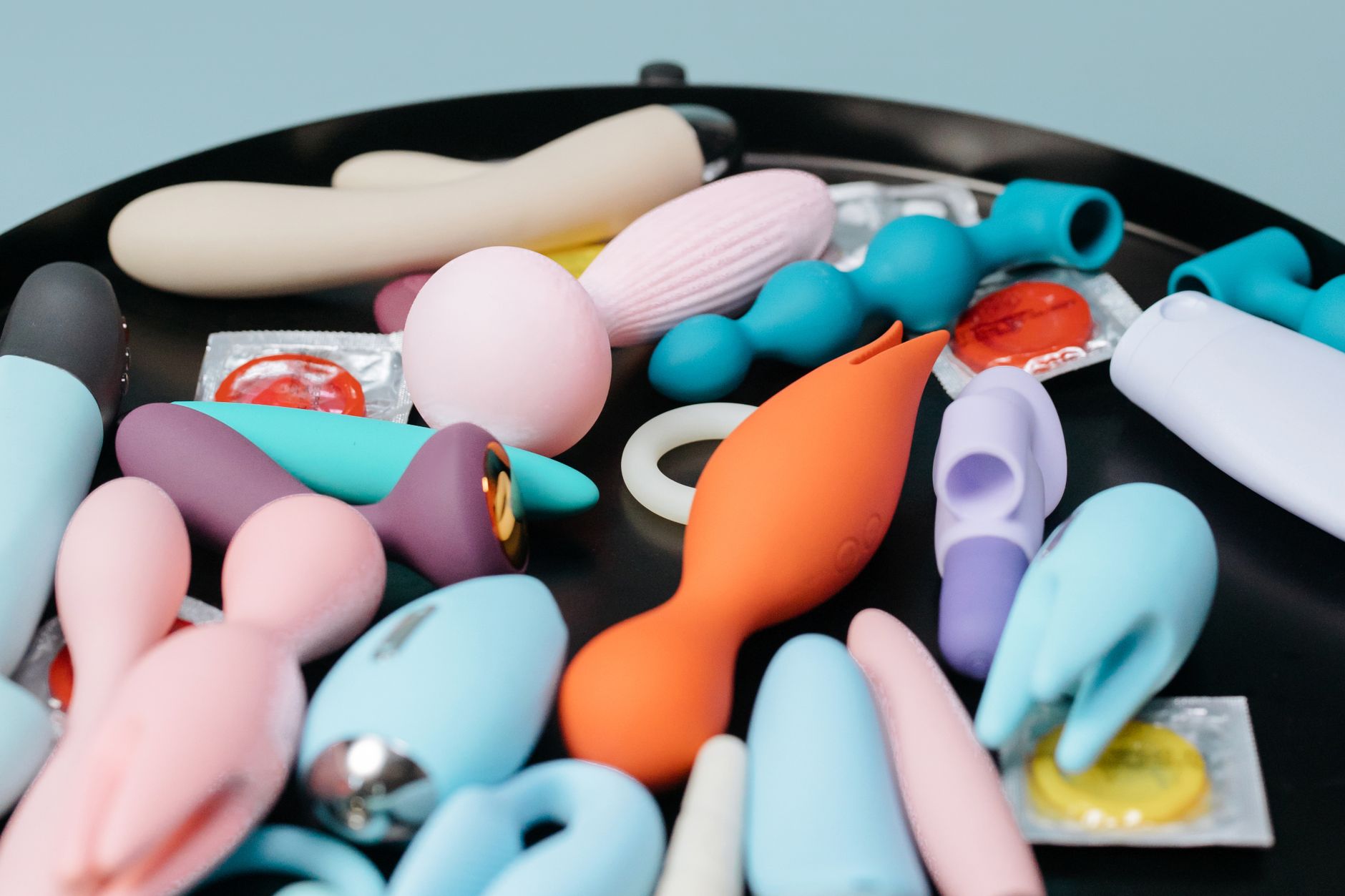
Photo by cottonbro studio on Pexels
The desire mismatch that shows up here
One more dynamic: sometimes couples come to me saying that introducing a lemon vibrator together actually broke their rhythm because the intensity expectation was suddenly different.
Say you typically have sex that takes 10-15 minutes from start to finish. Now you're using a clitoral vibrator that can bring you to orgasm in 3-5 minutes if you're focused. Your partner hasn't adjusted. They're still operating at the old timeline. And suddenly you're either waiting for them (which kills arousal) or reaching orgasm way faster than they expected (which can feel awkward or make them feel inadequate).
This is a conversation problem dressed up as a sensation problem. Before you blame the lemon sucker, check: are you and your partner actually aligned on what you want the experience to be? Speed matters less than intention.
What actually helps (the practical part)
Four things that shift this dynamic:
Start with conversation, not the toy. Talk about what you each want before you introduce a lemon vibrator into partnered play. Are you using it to speed things up? To add novelty? To help you reach orgasm when you might not otherwise? Different answers mean different approaches.
Lower the intensity setting at first. If you normally use your lem vibrator at setting 4 or 5 solo, start at setting 2 with your partner. You'll likely want to climb from there once your nervous system settles. The point is to skip the overstimulation surprise.
Build in a solo phase. Some couples find that they use the lemon clitoral vibrator alone for 2-3 minutes first, to get fully aroused and present in their body. Then their partner joins. It gives you that alone-baseline while still being partnered play. It works surprisingly well.
Talk about what turns you on about the experience. Is it that they're watching? That they're touching you elsewhere while you use the toy? That they're using their own toy at the same time? Different partners bring different energy. Some people go quiet and observant. Others narrate. Some want to be involved hands-on. There's no wrong answer, but there's a huge difference between guessing and knowing.
When the intensity actually does need adjusting
Sometimes the tool itself does need tweaking. If you're always reaching for lower settings with a partner and it never feels quite right, you might have a slightly different body response in partnered contexts. That's real.
But before you assume you need a different lemon sexual toy, experiment with the psychological variables first. A lower pelvic floor tension and better attention from your partner often solves the problem faster than switching toys.
If you do want to explore different options, the Hello Nancy range has tools with varied intensity curves. The Berri, for example, has a gentler ramp than the Lem. But that's a later-stage conversation.
The bigger picture
Your lemon vibrator isn't broken when it feels different with a partner. Your nervous system is doing exactly what it's supposed to do. It's registering the presence of another person and shifting its baseline.
The couples who navigate this best aren't the ones with the perfect toys. They're the ones willing to talk about it. They check in. They adjust together. They prioritize communication over performance.
Your pleasure matters in partnered contexts too. Not after your partner's pleasure. Not as an afterthought. Not if it's convenient. As part of the design. That conversation, more than any intensity setting, changes everything.
People also ask
Why does my lemon vibrator feel less intense when my partner is present?
Your nervous system operates differently when you're not alone. The presence of another person naturally activates your sympathetic nervous system (alertness) rather than your parasympathetic nervous system (relaxation). This raises your baseline sensitivity threshold, meaning sensation has to be stronger to feel the same. Your pelvic floor also tends to tighten slightly, which reduces the responsiveness of tools like a lemon clitoral vibrator. This is completely normal.
Can using a lemon sucker together actually improve my relationship?
Tools can create opportunity for connection, but they don't fix communication issues. If a couple talks openly about pleasure, sets shared expectations, and stays curious about what each person wants, introducing a clitoral vibrator can absolutely deepen intimacy. But if you're using it to avoid a deeper conversation, it won't help. The lemon vibrator is the easy part. The conversation is the work.
Is my partner supposed to be using their own toy at the same time?
Not necessarily. Some couples do. Others have one person using the lemon sexual toy while the partner provides other stimulation. Some partners observe and engage verbally. There's no standard. The only rule is that you both want whatever approach you're taking. If you're unsure what you each want, that's the conversation to have first.
How do I not feel self-conscious using a lemon clitoral vibrator with my partner watching?
Self-consciousness usually comes from uncertainty about whether your partner actually wants to be there. Have a direct conversation before you start: "I want to use my vibrator with you. I'm nervous about it feeling weird. What do you want to experience?" That shifts it from performance to partnership. Your partner's genuine interest (or lack thereof) will become clear. Work with what's real.
Does my partner feel left out if I'm using a lemon vibrator and they're not doing anything?
Not if you've agreed that's what you're doing. Some partners love watching. Some find it arousing. Some want to be involved hands-on elsewhere. The issue arises when there's an unspoken assumption that one person should be doing something just to "contribute." Talk about what each of you actually wants. You might be surprised.
Should I use a different intensity setting for partnered play than solo play?
Probably, yes. Most people need to start lower and work up when their partner is present, because their baseline sensitivity is higher. But this varies wildly. Some people need more intensity to break through the mental noise of having someone else there. Experiment together and check in. Your solo settings are a starting point, not a rule.
What comes next
If you're introducing a lemon vibrator into partnered play, start with honesty about what you each want. The intensity adjustment usually follows naturally from that. And if you want to explore how couples navigate pleasure more broadly, we've written about how to choose lemon vibrators for couples exploring together and how lemon vibrators can help after relationship changes.
Your pleasure, and the way it shows up with a partner, deserves intention. You deserve a partner who's genuinely curious about it. And the right tools, like the Hello Nancy collection of lemon clitoral vibrators, make that exploration easier.
If you have questions about what might work for your specific situation, reach out. That's what we're here for.