
Let's talk about what depression actually does to sex
Depression doesn't erase desire. It doesn't break the wiring. What it does is this: it replaces motivation with static. The thought of sex feels distant, effortful, maybe even pointless. You might have the physical capacity to experience pleasure, but the mental overhead to get there feels impossible. And that gap between capacity and motivation is where a lot of people get stuck.
Here's what I see clinically. People with depression often report that the arousal pathway has become so worn down by low dopamine and emotional fatigue that even thinking about pleasure feels like a chore. The executive function just isn't there. And then guilt follows. "I should want this." "My partner is frustrated." "Why can't I just feel normal?" The shame becomes its own barrier.
Lemon clitoral vibrators work in this context not because they're magic, but because they remove friction from the equation.
Why friction matters more than you think
Depression is a motivation disease. Anything that requires planning, setup, or emotional labor becomes harder. You might skip a shower you'd normally take, not because you're dirty, but because the shower itself feels like a project.
Sex and self-pleasure are the same. When you're depressed, the overhead of getting ready, finding the right space, thinking about what you want is often enough to kill the whole thing before it starts. That's not laziness. That's neurochemistry.
Lemon adult toys solve this in a specific way. They're small, immediately accessible, require zero setup, and deliver sensation instantly. You don't need to warm up your body the same way. You don't need extensive foreplay or mental preparation. A lem vibrator uses gentle suction stimulation that works even when your nervous system is flat. You turn it on, and pleasure begins almost immediately.
Compare that to traditional vibrators, which often require more friction, longer warm-up time, and more engagement from you. When depression is sitting on your chest, that extra labor is the difference between trying and not trying.
The dopamine piece (and why it matters)
Depression flattens dopamine. That's the neurotransmitter that makes pleasure feel like pleasure. Even if your body responds, your brain might not register the feeling as "good." You might have an orgasm that feels muted, disconnected, or mechanical.
Lemon clitoral vibrators, and suction-based lemon sexual toys in particular, tend to produce a faster sensory pathway. The sensation is distinct, localised, and intense in a way that can cut through the dopamine fog. It's not that the pleasure is stronger. It's that the signal reaches you faster, and the pattern of stimulation is different enough to register as novel. Novelty wakes up dopamine a little.
Many people tell me that when they return to solo play with a lem vibrator after depression has been quiet, the sensation feels almost shocking. Not in a bad way. In a "oh, I can actually feel that" kind of way.
Building a practice around pleasure when motivation is low
Here's the framework I recommend.
Start absurdly small. Not "have a session." Think "turn on the lem for three minutes." That's all. You're not trying to reach orgasm or achieve anything. You're just sending a signal to your nervous system that pleasure is possible. After you do this three or four times, you can add one minute.
Remove all external pressure. Tell your partner you're taking solo play off the table for a while. No performance, no proving anything. Just you and the lemon vibrator. This matters more than you'd think. Depression loves an audience of obligation.
Anchor it to something you already do. Not "I will take time for pleasure." Instead, "right after I brush my teeth, I'll use the lem for two minutes." You're piggybacking on existing habit infrastructure, which requires zero willpower.
Lower your sensory expectations. You might not feel anything the first time. That's okay. Your nervous system is depressed. Sensation might be muted. Use the lem anyway. You're rebuilding the pathway, not trying to orgasm.
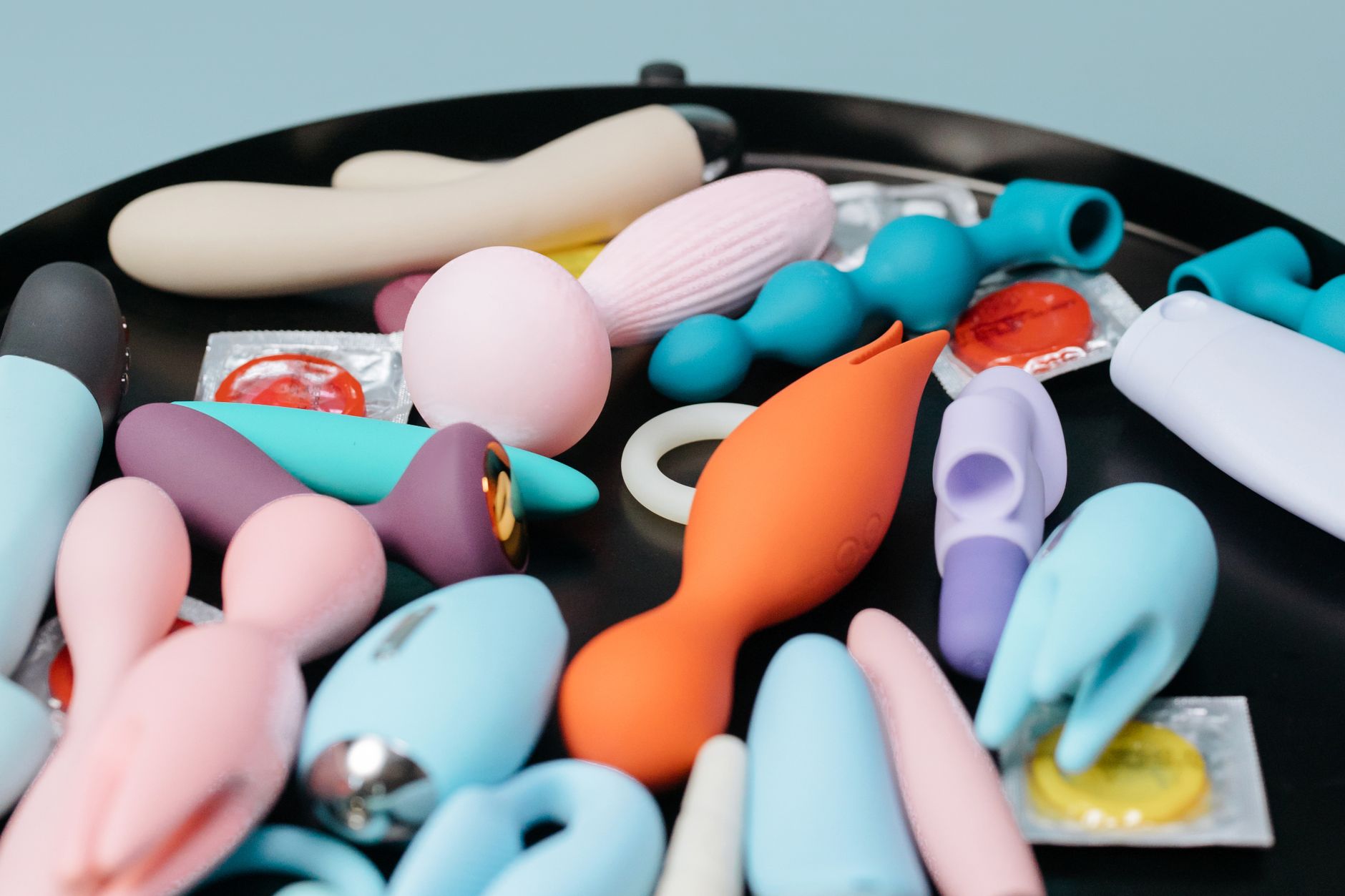
Photo by cottonbro studio on Pexels
What changes when you're consistent
Over two to three weeks of this micro-practice, something shifts. Your nervous system starts to recognize the signal. The dopamine pathway gets a tiny bit more responsive. You might start to feel anticipation building a few minutes before you touch yourself. That anticipation is the dopamine starting to wake up.
Then, maybe, sensation becomes more interesting. Not necessarily stronger, but more present. You might notice that a particular lemon vibrator pattern feels good in a way you'd forgotten. These are small wins. They matter because depression is built on the belief that nothing will ever feel good again. Actual evidence to the contrary, even tiny evidence, is powerful.
The partner conversation (if there is one)
If you're in a relationship, your partner probably notices the sexual withdrawal. And they might be hurt or frustrated. That's worth addressing directly, but not by forcing yourself back into sex before you're ready. How to use lemon vibrators when you have low libido from stress covers some of this, but the baseline is this: depression is a third party in your relationship. It's not a personal rejection.
The conversation is something like: "I'm rebuilding my capacity for pleasure because depression has flattened it. I'm starting solo. I'll let you know when I'm ready to include you." That's honest and it sets a boundary that protects both of you.
When the lemon sucker alone isn't enough
If depression is severe, medication can help enormously. Some antidepressants do flatten sensation or orgasm, but that's a separate problem that a good psychiatrist can address. If you're already on medication and it's helping your mood but affecting arousal, there are solutions. You don't have to choose between mental health and sexual pleasure.
Therapy, especially Cognitive Behavioral Therapy or Acceptance and Commitment Therapy, also works. Not because it will "fix" your desire by force, but because it addresses the shame and the executive dysfunction that depression stacks on top of low motivation.
Building back toward partnership
Once you've spent a few weeks with the lem vibrator, you might start to notice arousal returning during everyday moments. A memory, a touch, a thought. When that happens, you're ready to start thinking about shared pleasure again. Not because you have to. Because it's starting to feel possible.
Partner sex looks different when you're rebuilding from depression. It's slower. It might focus on touch or oral sex rather than penetration. It might be very short. It might not end in orgasm. How to use lemon vibrators when your partner wants penetration offers one angle on this, but the main point is that you get to set the pace.
Some of my clients find that bringing the lemon vibrator into partnered sex helps, because the sensation is so distinct that it short-circuits the perfectionism that depression brings. You're not performing. You're just feeling something good together.
The long game
Depression isn't linear. You might have good weeks and terrible weeks. During the terrible weeks, the practice is still "turn on the lem for two minutes." You're not building toward permanent arousal. You're building a habit of telling your nervous system that pleasure is still there, even when the depression is loud.
Over months, this adds up. Your dopamine system gets more responsive. Your body remembers what pleasure feels like. Your brain starts to believe that good sensations are possible.
The lemon clitoral vibrator is a tool that works because it's frictionless and it delivers fast sensation. But the real magic is consistency and compassion. You're not trying to feel normal. You're slowly rebuilding the possibility of feeling good.
People also ask
Can I use a lemon vibrator if I'm on antidepressants?
Yes. Some antidepressants do affect sensation or orgasm, but a lot don't. And even if yours does, using the lemon sexual toy is still valuable because it's rebuilding the neural pathway for pleasure, regardless of whether you reach orgasm. If sexual side effects are significant, talk to your prescriber about timing (sometimes taking the medication at a different time of day helps) or switching medications.
How often should I use the lemon sucker if I'm depressed?
Start with three to five minutes, three to four times a week. That's enough to signal your nervous system without adding pressure. You can increase from there, but consistency matters more than duration. Better to do two minutes every day than thirty minutes once a week.
Will using a lem vibrator make my depression worse?
No. If anything, the small dopamine activation from pleasure-seeking can be part of your recovery. The key is removing all expectations. You're not using it to "fix" your depression. You're using it to tell your body that pleasure still exists, and that's a form of self-care when you're depressed.
What if I feel nothing the first few times?
That's common. Depression blunts sensation. The lemon vibrator is still working, even if you don't feel much. You're building the habit and the neural pathway. Sensation often returns within two to three weeks of consistent use.
Is it okay to use a lemon clitoral vibrator even if I don't want to?
That's the wrong framing. Depression tells you that you shouldn't want anything. But rebuilding pleasure during depression is actually an act of resistance. You're saying: "Even though I feel nothing, I'm going to practice the motions of feeling good." That's not forced. That's strategic self-care.
Should I tell my therapist I'm using a lemon vibrator?
If your therapist is sex-positive and trained in trauma-informed care, yes. They can help you use it as part of your recovery. If they're not, you don't have to. But a good therapist won't shame you for any strategy that's helping you reconnect with your body and pleasure.
The bottom line
Depression is a barrier to motivation, not to capacity. The lem vibrator works because it removes friction from the equation and delivers sensation fast enough to cut through the dopamine fog. Consistency over intensity. Small wins matter. And you deserve to rebuild pleasure, even when depression is telling you that you don't.
If you're struggling to take that first step, or if depression feels overwhelming, reach out to a therapist or your doctor. Pleasure is part of recovery, but it's not the only part. You might need support on multiple fronts.