
Here's what I hear in my practice
"I want to use a vibrator with my partner, but I'm worried it means something's wrong. Or that they'll feel like they're not enough. Or that it'll make things weird." This fear is completely real, and it's keeping so many people from experiencing shared pleasure that could genuinely change their relationship.
Between you and me, the couples who integrate toys into their sex life don't have better bodies or lower standards. They have better communication. And better communication builds better intimacy, which builds better sex. That's not a coincidence.
The belief that needs to die
You've probably internalized this one: "If we need a toy, something's broken." It's everywhere in movies, in how people talk about sex, in the guilt that whispers when you even think about buying something like a lemon vibrator.
Here's the reality. Your body is not broken if penetration alone doesn't get you there. About 75 percent of people with vulvas don't orgasm from penetration alone. That's not a flaw. That's biology. A clitoral vibrator isn't a band-aid for dysfunction. It's an instrument that lets your partner participate in something they physically couldn't before.
When you bring that into the bedroom, you're not saying "you're not enough." You're saying "I want to feel amazing with you, and here's how we can both experience that." That's the opposite of rejection. That's invitation.
Why hesitation makes sense (and what to do about it)
Three real barriers come up in my office all the time.
"I'm worried they'll feel replaced." This comes from a place of protection, not weakness. But here's the thing: if your partner's sense of self-worth depends on being your sole source of pleasure, that's a different conversation than introducing a vibrator. That's a conversation about what partnership actually means. A healthy partner doesn't feel threatened by your pleasure expanding. They feel turned on by it.
"I don't know how to bring it up without making it weird." You don't need to make a production of it. The smoothest way is the most direct way. "Hey, I've been thinking about what might feel good for me during sex, and I'm interested in trying a clitoral vibrator. I think it could be fun for us to explore together." That's it. No apology, no over-explanation, no "I've been watching videos." Just a clear statement about what you want.
"What if they say no?" Okay, that's worth sitting with. If your partner refuses to use a toy that would increase your pleasure, that's worth understanding. Are they genuinely uncomfortable, or are they protecting something about their own sense of adequacy? Those are different problems. The first one you might solve with conversation and time. The second one probably needs to be addressed as a relationship issue, possibly with a therapist.
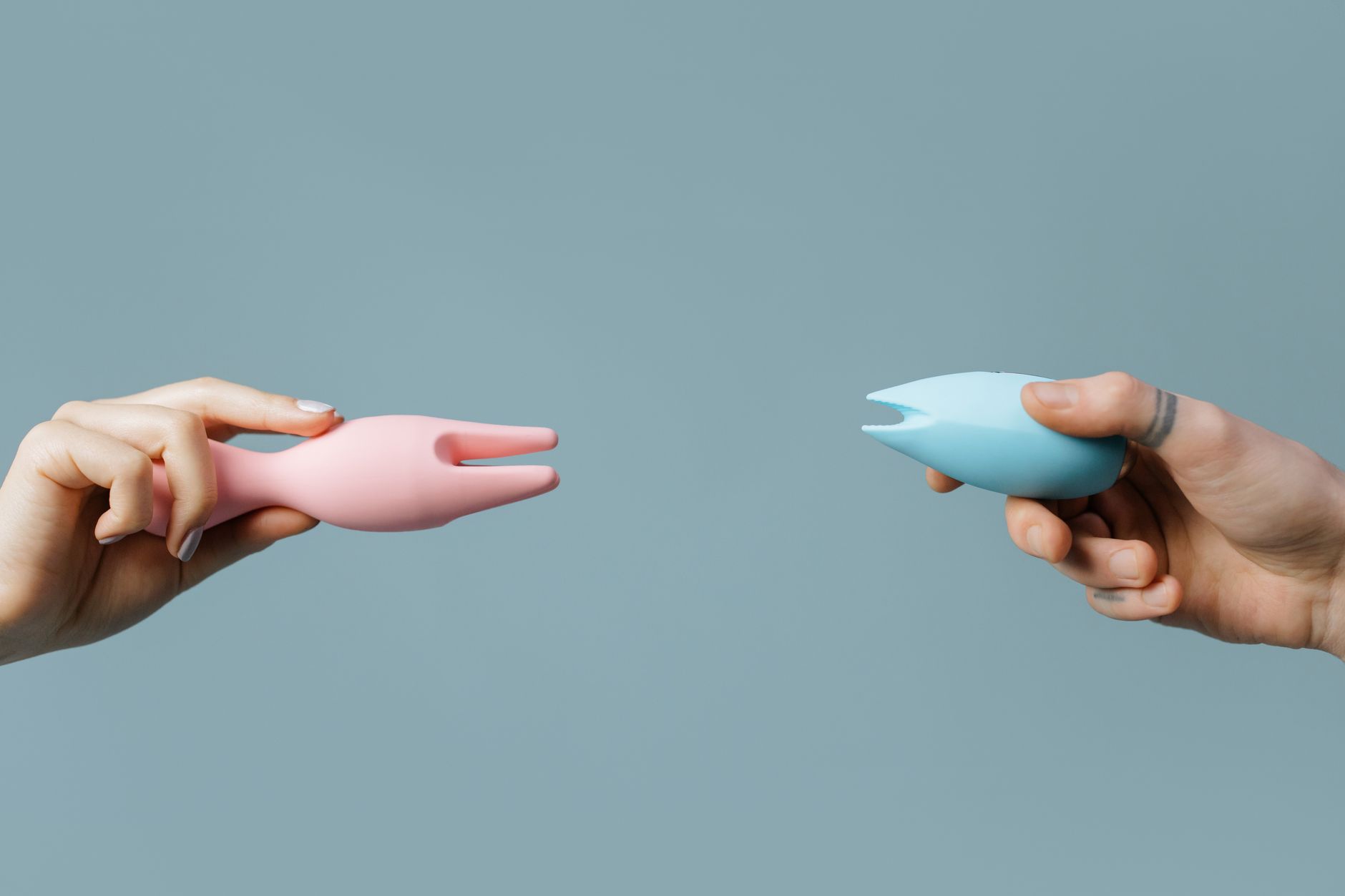
Photo by cottonbro studio on Pexels
How to actually introduce it during sex
Don't surprise your partner mid-intimacy with a toy they weren't expecting. That's not a plot twist. That's a violation of consent, even if it's well-intentioned. The conversation happens first, outside the bedroom.
Once they've agreed to try, here's the setup that works:
Start together in foreplay. Let your partner be involved from the beginning. Not watching from the sidelines. Involved. They can hold it, explore with you, understand how it feels against different parts of your body. This is where the hesitation melts, honestly. When someone who was worried starts to feel how much pleasure it brings, the insecurity usually evaporates.
If you're using a lemon vibrator like the Lem, start at a lower intensity setting (usually 1-3 on the dial). Let your partner apply it while kissing you, touching you with their other hand. This keeps them connected to the experience, not sidelined by it. Many couples find that external clitoral stimulation with a vibrator during penetration creates sensations that weren't possible before. Your partner gets to feel you respond in real time. That's collaborative, not separate.
Talk during. "That feels good right there" or "A bit more pressure" isn't clinical. It's intimate. It's telling your partner exactly how to pleasure you. That's what good sex is.
The deeper conversation underneath
If you're hesitant to bring a vibrator into your relationship, there's often something else underneath. Maybe you've internalized messages that good girls don't need tools. Maybe you're protecting your partner's ego. Maybe you've never felt like you were allowed to have clear desires.
That's worth examining, ideally with a therapist. Because your pleasure matters. Not as a luxury. As a basic fact of what you deserve in a partnership.
When you can claim your own pleasure without apology, your partner gets to experience you fully. That's the shift that changes everything. You're not asking permission anymore. You're inviting them into something you want. That's powerful.
Making it a shared experience
The couples I've worked with who report the most satisfaction are the ones who treated the vibrator as a tool for both of them to enjoy. Not something you hide. Not something that feels like a chore for your partner. Something you're exploring together.
Let your partner choose the settings sometimes. Let them decide where to use it. Ask them what they notice about how you respond. Make it a conversation, not a performance. This is where hesitation becomes curiosity, and curiosity becomes intimacy.
If you've been feeling disconnected from pleasure during long-term relationships, bringing in a tool like a lemon vibrator can actually rebuild that connection. Because now you're exploring together. You're both learning something new. You're both invested in what feels good.
What to expect afterward
After the first time, don't make it weird by over-discussing it. If it felt good, it felt good. If it felt awkward, that's information too. You can adjust. Maybe a different moment in foreplay works better. Maybe a different position. Maybe you need to talk more beforehand about what you both want.
But here's what usually happens: the second time is easier. The third time, it's just part of your normal rhythm. The hesitation that felt so heavy before starts to feel kind of silly. Because you're both experiencing something good together.
Many partners actually report that using a vibrator with someone they love deepens their sense of connection. You're being seen. You're being pleasured. You're being prioritized. That's intimacy in its most basic form.
FAQ
What if my partner is really insecure about using a vibrator?
Insecurity usually comes from a misunderstanding about what a vibrator means. Sit down outside the bedroom and talk specifically about their worry. Is it that they think they're not satisfying you? That you'd rather be alone? That you're losing attraction? Once you know what the actual fear is, you can address it directly. Sometimes that's a longer conversation. Sometimes it's one conversation and then you move forward. Sometimes you need professional help, and that's totally fine.
Can we use a lemon vibrator if we don't have penetrative sex?
Absolutely. A clitoral vibrator is for external stimulation. You can use it during foreplay, during manual sex, during oral sex, or just for pleasure on its own. You don't need penetration in the picture at all.
How do I know which vibrator to start with?
Start with something that feels approachable and not intimidating. The Lem is designed to be intuitive, with clear intensity settings and a shape that feels good in your hand and against your body. Read reviews from other people, look at photos, think about what appeals to you. You're not buying a vibrator for your partner. You're buying one for yourself. Their job is to participate in your pleasure, not to choose your tool.
What if I want to use a vibrator but my partner travels or we're long distance?
A vibrator is for you. It's not a replacement for your partner. It's something you can enjoy alone, and then describe to your partner, and that becomes its own kind of intimate communication. Some couples find that solo vibrator use creates interesting conversations when they're apart. Others prefer to wait. Both are fine.
How do I bring it up if we've never talked about sex much?
This might be bigger than just the vibrator. If you and your partner struggle to talk about pleasure, that's worth addressing as a relationship issue. But if you want to start small, you can begin with something simple: "I've been thinking about what would feel good for me, and I'd like to talk about it." That opens the door without making it about the vibrator specifically. The vibrator is just the concrete thing you're using to have the conversation you should be having anyway.
Is it normal to feel guilty about wanting a vibrator?
Yes. Especially if you grew up with messages that female pleasure was shameful, or that "good" people don't need tools, or that wanting more is greedy. Those messages run deep. But your pleasure is not a character flaw. It's a fact. And sharing that with a partner you trust is one of the most intimate things you can do.
The real shift
Hesitation usually melts when you stop thinking of a vibrator as a confession and start thinking of it as an invitation. You're not admitting defeat. You're opening a door. And the partner who walks through that door with you, who's curious instead of threatened, who wants your pleasure as much as you do? That's the person worth having sex with.
Your body knows what it needs. Trust that. Your partner's job is to support that, not protect themselves from it. And if they can't do that, that's important information about the relationship itself.
If you're ready to explore how to deepen physical connection with your partner, introducing a vibrator during foreplay can be a natural first step. Or if you're working through anxiety that's killing your arousal, that's a separate conversation worth having too. Either way, your pleasure matters. Start there.